FREE. FAIR. GLOBAL.
African Countries Demand More Power in Security Council at UN–AU Cooperation Meeting
African demands for permanent Security Council representation drew support as delegates debated UN–AU cooperation, peace-operation financing and responses to conflict across the continent.
Eathan Ligon
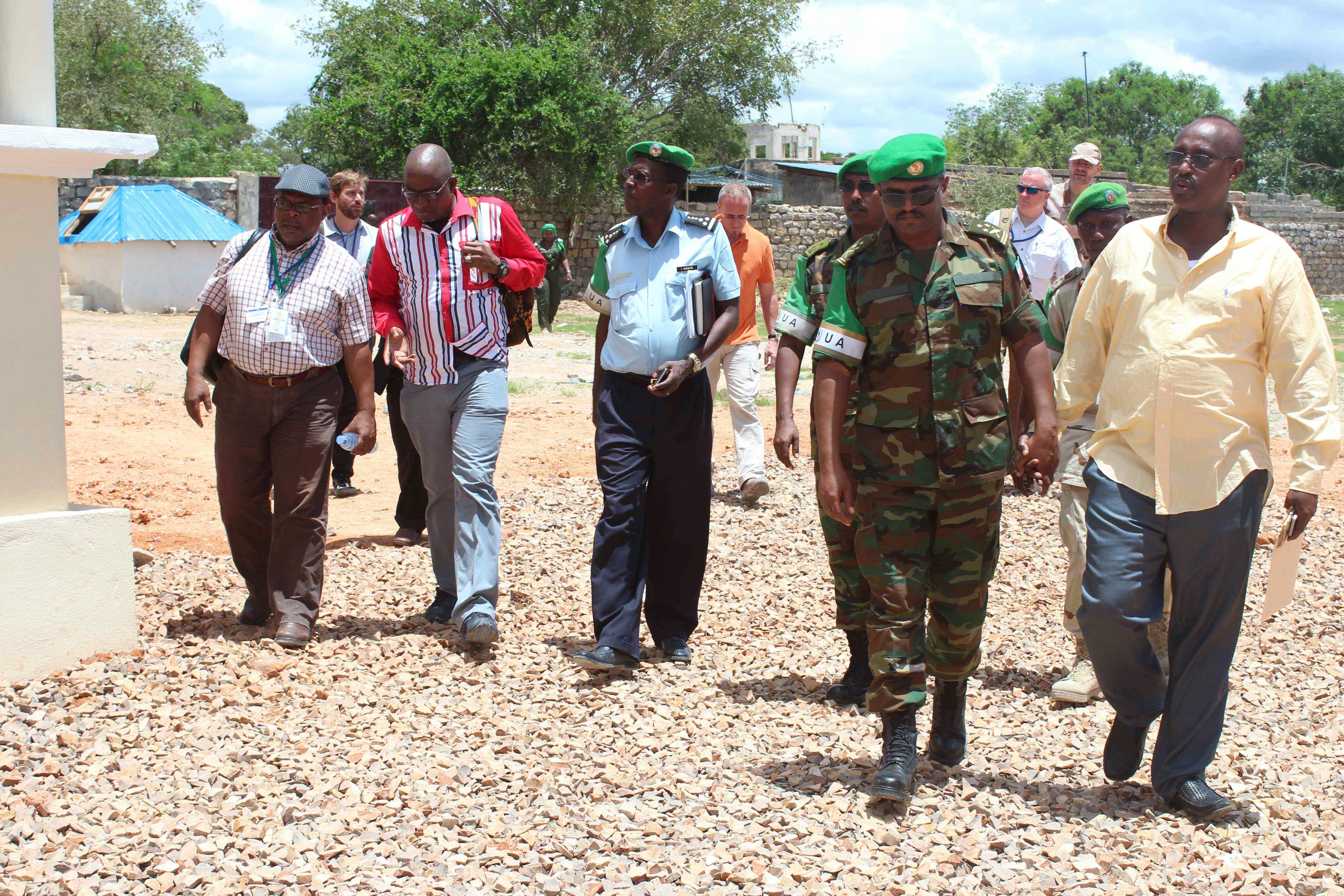

African demands for permanent Security Council representation drew support as delegates debated UN–AU cooperation, peace-operation financing and responses to conflict across the continent.
More than eighty years after the founding of the United Nations, African countries continue to demand greater representation in the Security Council. At the Council’s October 6 meeting on cooperation with the African Union, regional security and financing were at the forefront of discussion. A central question was how to implement Resolution 2719 (2023), which allows the Council, on a case-by-case basis, to authorize UN assessed contributions covering up to 75 percent of the annual budget of an AU-led peace support operation.
Parfait Onanga-Anyanga, the UN Secretary-General’s Special Representative to the African Union, opened the briefings with an assessment of some of Africa’s most fragile security environments. He highlighted violent extremism, weak state institutions, organized crime and the inequitable management of natural resources. He identified the Horn of Africa, the Great Lakes region and the Sahel as areas where conflict, humanitarian pressures and external influences increasingly intersect. In response, he called for stronger cooperation, investment in prevention and mediation, and predictable support for African-led peace operations.
France, the first Council member to speak, voiced support for preventive diplomacy and mediation. Its representative also said France was organizing an international conference on financing the AU Peace Fund to mobilize contributions from institutions, philanthropies and the private sector. On Council reform, France supported two permanent African seats with the same rights as existing permanent members, including the veto. Somalia and the Democratic Republic of the Congo also pressed for two permanent seats with veto rights, while the United Kingdom reiterated its support for permanent African representation.
The United States emphasized operational effectiveness and responses to current conflicts. Its representative called for an immediate humanitarian truce in Sudan and said Washington was considering an expansion of the Darfur arms embargo to cover the whole country. He also said Resolution 2719 could be a useful tool for financing AU-led peace support operations, while stressing that such deployments should be small, time-bound, have clear objectives and be considered case by case.
China and the Russian Federation emphasized African leadership in resolving the continent’s conflicts. China urged developed countries to fulfil their development and climate-finance commitments. Its representative also cited China’s zero-tariff treatment for African countries with diplomatic relations with Beijing, anti-Ebola assistance and Global South cooperation initiatives. Russia attributed instability to poverty, terrorism, historical colonial exploitation and what it described as modern neocolonialism. Its representative supported a greater African voice in the Council and continued support for the African Union Support and Stabilization Mission in Somalia (AUSSOM), an AU-led mission.
Speaking in her national capacity before the meeting adjourned, Greece’s representative set out three priorities: prevention and political solutions; practical implementation of Resolution 2719; and a people-centred approach to security. She pointed to conflicts in Sudan, the Democratic Republic of the Congo, Somalia and the Sahel, and highlighted AUSSOM’s persistent resource gaps. Her remarks also stressed climate-related security risks, protection of children, and the participation of women and young people in mediation, peacebuilding and peace operations.
Source note: This report draws on Eathan Ligon’s coverage and the UN-hosted automated meeting transcript. The transcript is not an official UN record. Delegation positions are paraphrased and attributed to the speakers who expressed them.
Sources
- UN Transcripts: Security Council, 10233rd meeting, October 6, 2026 (automated transcript; not an official UN record)
- United Nations: Adoption of Resolution 2719 (2023), financing of African-led peace support operations
- Permanent Mission of China to the UN: Statement on UN–AU cooperation, October 6, 2026
- Permanent Mission of Russia to the UN: Statement on UN–AU cooperation, October 6, 2026