FREE. FAIR. GLOBAL.
Debt, Shocks and Coercion Squeeze Development as Delegates Urge Delivery on Sevilla Commitment
At the UN Second Committee, delegations warned that debt, falling aid and external shocks are narrowing development choices, and urged delivery on the Sevilla Commitment.
Katherine Knisely
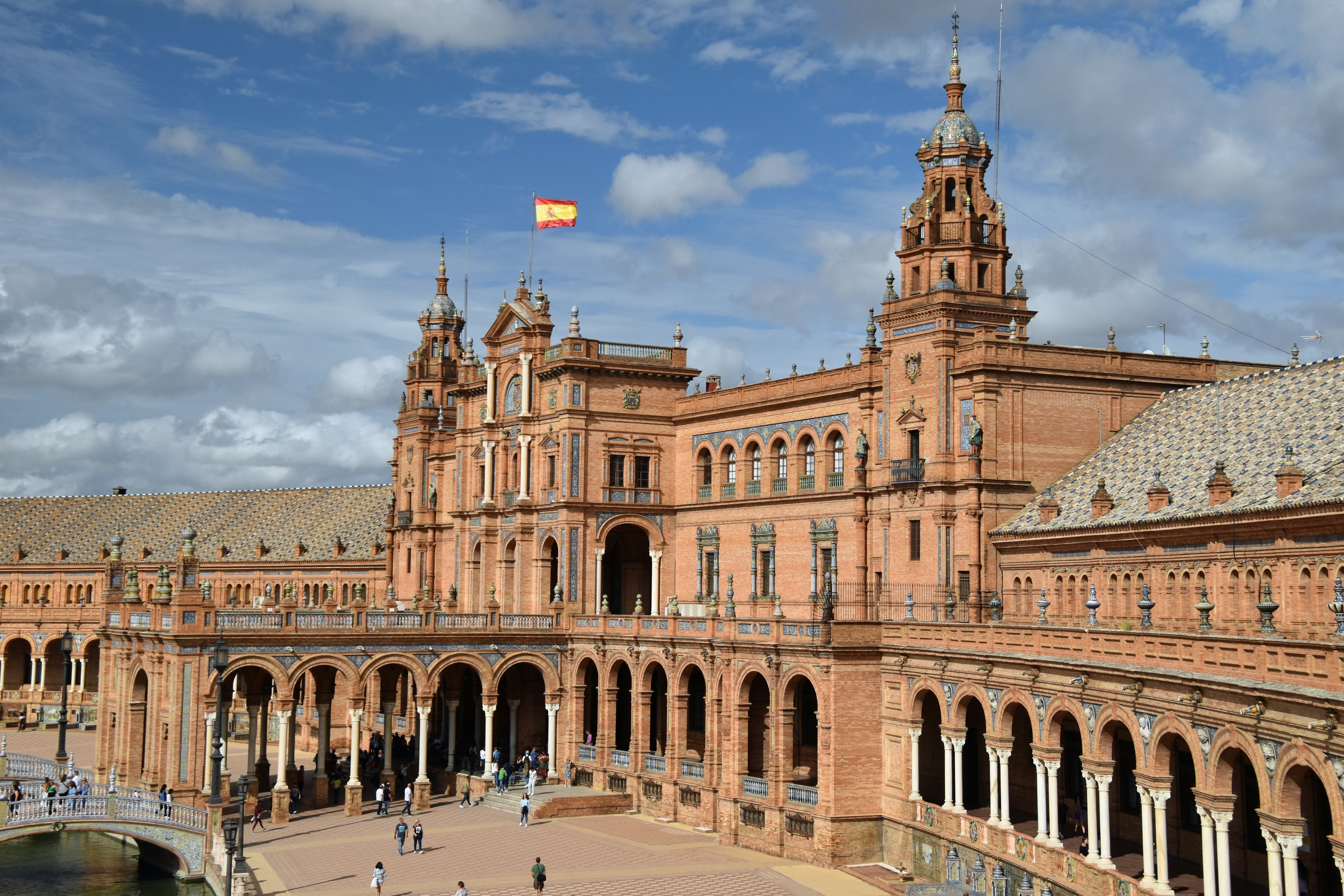

At the UN Second Committee, delegations warned that debt, falling aid and external shocks are narrowing development choices, and urged delivery on the Sevilla Commitment.
More than a year after the adoption of the Sevilla Commitment, delegates urged delivery on its promises, with developing countries facing a financing gap of some $4 trillion a year for the Sustainable Development Goals (SDGs), the General Assembly's Second Committee heard in New York on Thursday, October 8. Speaking for the Group of 77 and China, Uruguay warned that high debt servicing and borrowing costs are draining the fiscal space countries need. Resilience and national capacity building, along with a global financial safety net against shocks, were proposed as remedies.
Several external shocks and entrenched hurdles were said to be plaguing sustainable development gains and even threatening to reverse progress. First among them were unilateral coercive measures (UCMs). The G77 and China condemned them as a denial of the right to development, while Cuba, speaking for a group of like-minded countries, called for the unconditional lifting of UCMs and opposed tariffs and climate-related trade restrictions used for unilateral pressure or economic coercion. It also welcomed the designation of 4 December as the International Day against Unilateral Coercive Measures. Cuba cited humanitarian harm from US fuel restrictions; Belarus urged that sanctions be lifted, while Nicaragua rejected UCMs. The Arab Group, through Libya, condemned Israeli restrictions and the blockade on Gaza.
Beyond economic coercion, conflict loomed large. The Gulf Cooperation Council and Kuwait condemned the closure of the Strait of Hormuz, which they attributed to Iran, describing it as contrary to international law and a threat to food and energy security. The Arab Group also condemned the closure and disruption in the Bab el-Mandeb, and called on Iran to refrain from measures contrary to international law and UNCLOS. Yemen said the war with the Houthis, whom it described as Iran-backed, was harming its development.
Longer-term issues such as worsening debt burdens and servicing costs, which divert funds away from social services and infrastructure, were lamented. The African Group backed a proposed UN dialogue on debt; Sierra Leone sought a UN debt convention. Debt-for-nature, debt-for-climate and debt-for-education swaps were reiterated as ways to ease the burden, provided, CARICOM stressed, they deliver meaningful fiscal savings.
Fiscal space was repeatedly described as shrinking, with falling official development assistance (ODA) and higher borrowing costs producing what the Philippines called a squeeze on financing. CARICOM, the least developed countries (LDCs) and Sierra Leone pushed developed countries to stay true to their ODA commitments, with Malaysia recalling the 0.7 percent of gross national income target. Small island developing States argued that income-based measures overlook their vulnerabilities.
Structural transformation remained a persistent issue, with developing countries calling for reform of the global financial architecture, including multilateral development banks and the WTO, and a greater voice in decision-making. For Africa, credit assessment reform was front and center, as the African Group lauded the Africa Credit Rating Agency, launched in Mauritius on October 7, as a first step toward, in its view, ratings that reflect countries' current situations and future outlooks rather than past conditions.
Delegates also highlighted potential opportunities, including regional links such as the African Continental Free Trade Area and potential gains from AI and digital technologies. UNCTAD reported that strategic sectors such as critical minerals accounted for 44 percent of global greenfield project value in 2025, up from 16 percent in 2020. It cautioned that developing countries are missing out and that both the volume of investment and where it goes matter. South Africa called for critical-minerals investment that delivers value addition and technology transfer.
The joint debate on items 15 and 16 continues, with draft resolutions expected later in the session. UNCTAD’s full Creative Economy Outlook 2026 is due to be published. Preliminary estimates presented to the Committee, covering 150 countries, put the creative economy at 6.7 percent of gross value added in 2021; a dedicated chapter had already circulated.
Source note: This report draws on Katherine Knisely’s coverage and the UN-hosted automated meeting transcript. The transcript is not an official UN record. Delegation remarks are paraphrased, and the allegations and condemnations described above are attributed to the speakers who expressed them.
Sources
- UN Web TV: Second Committee, seventh plenary meeting, October 8, 2026
- UN Transcripts: Second Committee, seventh plenary meeting (automated transcript; not an official UN record)
- United Nations: Sevilla Commitment, paragraph 4
- UNCTAD: Global investment rises 6% to $1.6 trillion, but development gains remain uneven, July 2026
- African Union: Launch of the Africa Credit Rating Agency, October 7, 2026
- United Nations: International Day against Unilateral Coercive Measures