FREE. FAIR. GLOBAL.
Addressing Root Causes: Natural Resource Exploitation and Conflict
Resource exploitation remains a peacebuilding challenge as the AU and UN agree practical cooperation centered on national priorities.
Reporting by Mayah Ramadan; edited by GLOBAL.
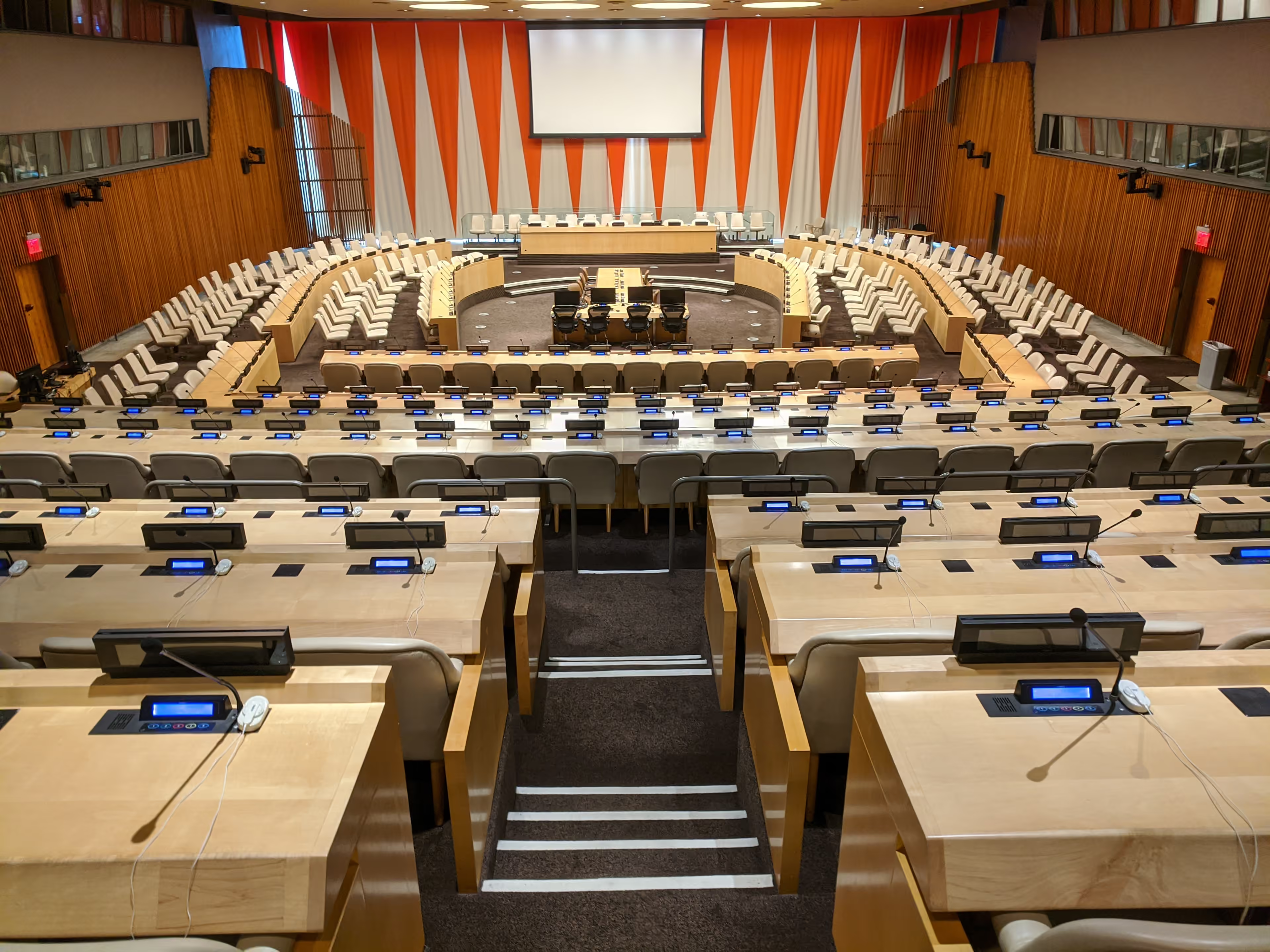

Reporting date: October 21, 2026 ninth annual AU PSC–PBC consultation in New York
Edited by GLOBAL. from Mayah Ramadan’s submitted report, with factual corrections and additional source verification. The report’s resource-conflict focus is retained, while the meeting’s agreed actions are stated from the official joint communiqué. The UN-hosted automated transcript is not an official record and warns that it was generated from an earlier, longer version of the recording.
NEW YORK: As the United Nations and African Union seek to strengthen peacebuilding across the continent, the illegal exploitation of natural resources remains one of the challenges facing regional cooperation. At the ninth annual consultation between the AU Peace and Security Council (AU PSC) and the UN Peacebuilding Commission (PBC) on October 21, 2026, Nigeria’s representative identified resource exploitation, armed groups and weak regional trust as interconnected challenges in the Great Lakes region.
Illegal resource exploitation has helped sustain armed conflict in parts of Africa for decades. A 2015 report by the UN Environment Programme and its partners documented how gold, timber, charcoal and wildlife smuggling financed armed groups and criminal networks in eastern Democratic Republic of the Congo. More recently, the UN Office on Drugs and Crime’s 2024 annual report described gold smuggling in the Sahel as a source of financing for armed groups and instability. These findings provide background to the economic pressures facing peacebuilding efforts.
During the consultation, Nigeria’s representative stressed that security gains must be consolidated through governance, livelihoods, reconciliation and the restoration of public services. The Great Lakes region’s interconnected challenges require sustained, coordinated engagement. Peacebuilding, the representative argued, must accompany prevention, diplomacy and regional dialogue, rather than being treated only as a post-conflict exercise.
To strengthen regional coordination, the AU PSC and PBC agreed in their joint communiqué to regular information-sharing and closer practical cooperation in country and regional contexts, at the request and with the agreement of the countries concerned. They also outlined possible joint or coordinated engagement, including a field visit subject to national consent, and exchanges to improve coordination among existing peacebuilding, development and financial efforts.
The principle upheld throughout the discussion was national ownership. Delegates underscored that international support must reinforce nationally led prevention strategies without overriding domestic initiatives. The communiqué also recognized sustainable development as a foundation for addressing the root causes of conflict. Transparent management of natural resources can support that goal by helping turn a source of conflict into revenue and livelihoods, an approach advanced in earlier UN work on the Great Lakes region.
As the 2025 UN Peacebuilding Architecture Review moves toward implementation, joint arrangements between the AU PSC and PBC aim to translate commitments into practical cooperation. Designated focal points will track agreed follow-up actions and provide periodic updates ahead of the next annual consultation in Addis Ababa in 2027. Moving from crisis response toward lasting peace will depend on how that cooperation supports the priorities of countries and communities affected by conflict.
Sources
- UN Web TV: Advancing synergies and regional approaches in support of nationally owned peacebuilding priorities in Africa, 21 October 2026
- UN-hosted automated transcript of the ninth annual AU PSC–PBC consultation
- AU–UN joint communiqué of the ninth annual consultative meeting, 21 October 2026
- UNEP: Organized crime in wildlife, gold and timber further fuels conflict in eastern DR Congo, 2015
- UNODC Annual Report 2024, page 10