FREE. FAIR. GLOBAL.
The UN makes its case for relevance under financial pressure
The title of the Secretary-General’s 2026 annual report, Vital, suggests its central argument. Published in 2026 and reviewing the organization’s achievements in 2025, the report presents the United Nations as indispensable at a time of growing political pressure and shrinking resources. Its account of achievements reads as a case for continued support: the demands on multilateral cooperation are expanding even as the means to sustain it contract.
Analysis by Katherine Knisely; edited by GLOBAL.
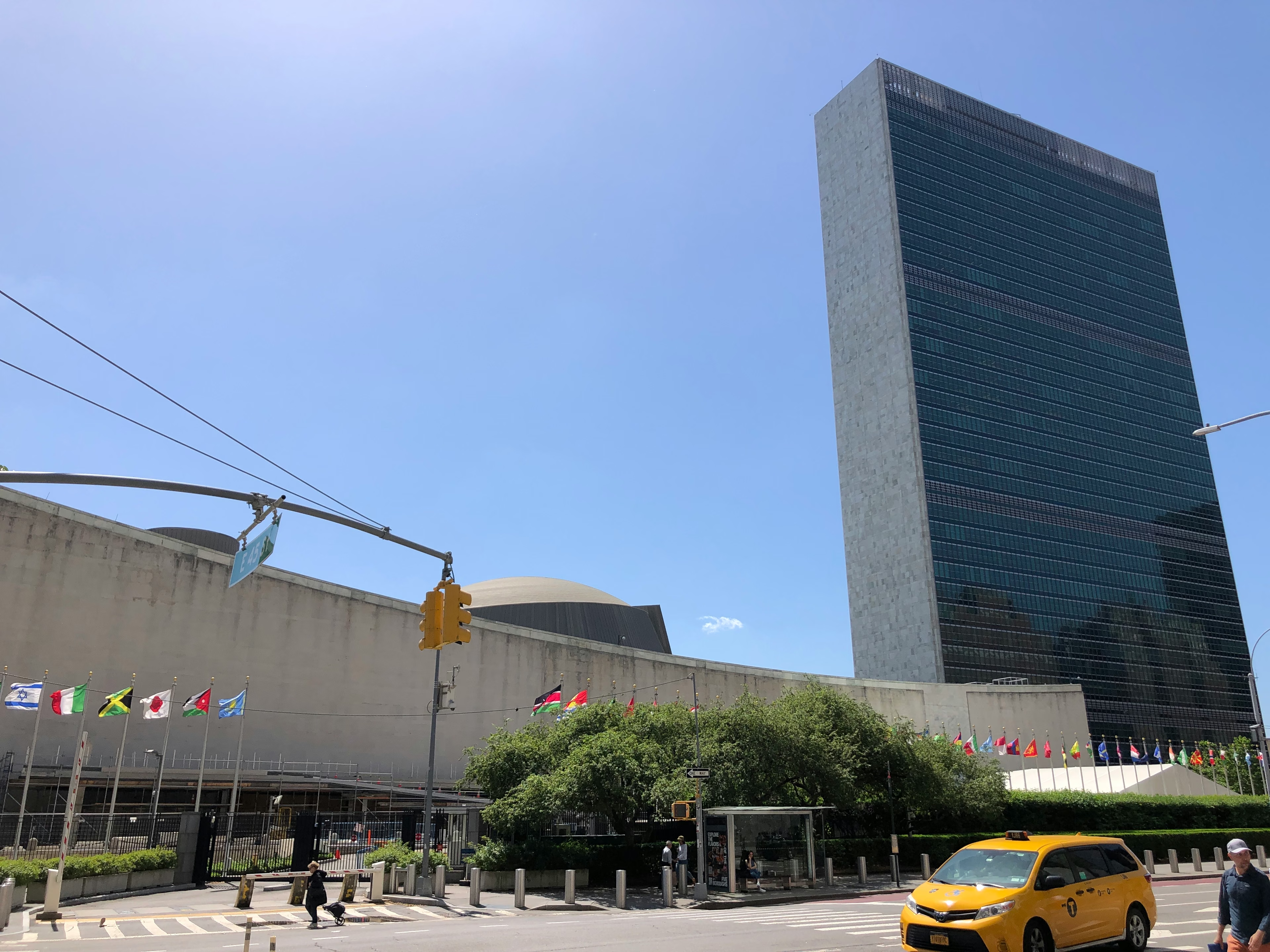

The title of the Secretary-General’s 2026 annual report, Vital, suggests its central argument. Published in 2026 and reviewing the organization’s achievements in 2025, the report presents the United Nations as indispensable at a time of growing political pressure and shrinking resources. Its account of achievements reads as a case for continued support: the demands on multilateral cooperation are expanding even as the means to sustain it contract.
The report’s presentation reinforces that message. At 67 printed pages, compared with 111 in the 2025 edition, it is about 40 percent shorter. Photographs, graphics and prominent statistics give its account of impact a more accessible form. This leaner presentation sits alongside the UN80 initiative’s emphasis on adapting the organization to a tighter financial environment, although the shorter format alone cannot demonstrate institutional efficiency.
The financial outlook is stark. The report projects that resources will decline by almost 25 percent between 2024 and 2026. UN80 is presented as a response to that constraint, seeking to make the organization work within a substantially reduced resource base. The underlying tension is whether reform can preserve the UN’s capacity to deliver when the need for its work remains so extensive.
Reading the financial figures requires care. The report’s $66 billion figure concerns resources across the UN system in 2024, while $14.5 billion concerns the Secretariat in 2025. These figures describe different institutional scopes and different years. They cannot be subtracted to determine how much was spent outside the Secretariat, and resources should not be treated as equivalent to audited expenditure.
Humanitarian assistance makes the consequences of constrained funding particularly visible. The illustrated report describes an appeal targeting 185 million people, with approximately $16 billion provided against $45 billion required, or about 35 percent. That gap shows how far available support falls short of identified needs. The report can demonstrate the value of humanitarian operations while also revealing the limits on what those operations can deliver.
The political context is similarly difficult. The report’s account of peace and security reflects the difficulty of operating amid interstate conflict and weakening respect for the UN Charter and international law. These pressures challenge the organization’s ability to act effectively and the willingness of states to uphold the framework on which its work depends.
Progress on sustainable development offers another measure of the distance between ambition and results. Only 36 percent of assessed Sustainable Development Goal targets are on track or showing moderate progress, leaving 64 percent outside those categories. These figures strengthen the argument that coordinated action remains necessary, but they also make clear that existing efforts are not delivering progress at the required pace.
Against this backdrop, the report highlights tangible achievements: the Sevilla Commitment on development finance, the opening of the Cybercrime Convention for signature, and the AI Scientific Panel and Global Dialogue on AI Governance. The high seas biodiversity treaty, known as the BBNJ Agreement, entered into force in January 2026. These developments illustrate the UN’s continuing ability to convene states and establish shared frameworks. They do not resolve the wider funding and implementation gaps. Vital is therefore most persuasive as an argument for the organization’s continued relevance under pressure, rather than as evidence that its resources or results already match the scale of global need.