FREE. FAIR. GLOBAL.
Stalled Progress in Search for Kuwait’s Missing Disappoints as Council Demands Outcomes from New UN Mechanism
Thirty-six years after Iraq’s invasion of Kuwait, 315 people remain missing. Security Council members urged measurable progress as Iraq announced a new excavation and Kuwait criticized delays.
Reporting by Katherine Knisely; edited by GLOBAL.

Reporting date: 26 October 2026
Edited by GLOBAL. from Katherine Knisely’s submitted reporting. Delegations’ allegations, denials and policy positions are attributed to their speakers. The UN-hosted automated meeting transcript is not an official verbatim record.
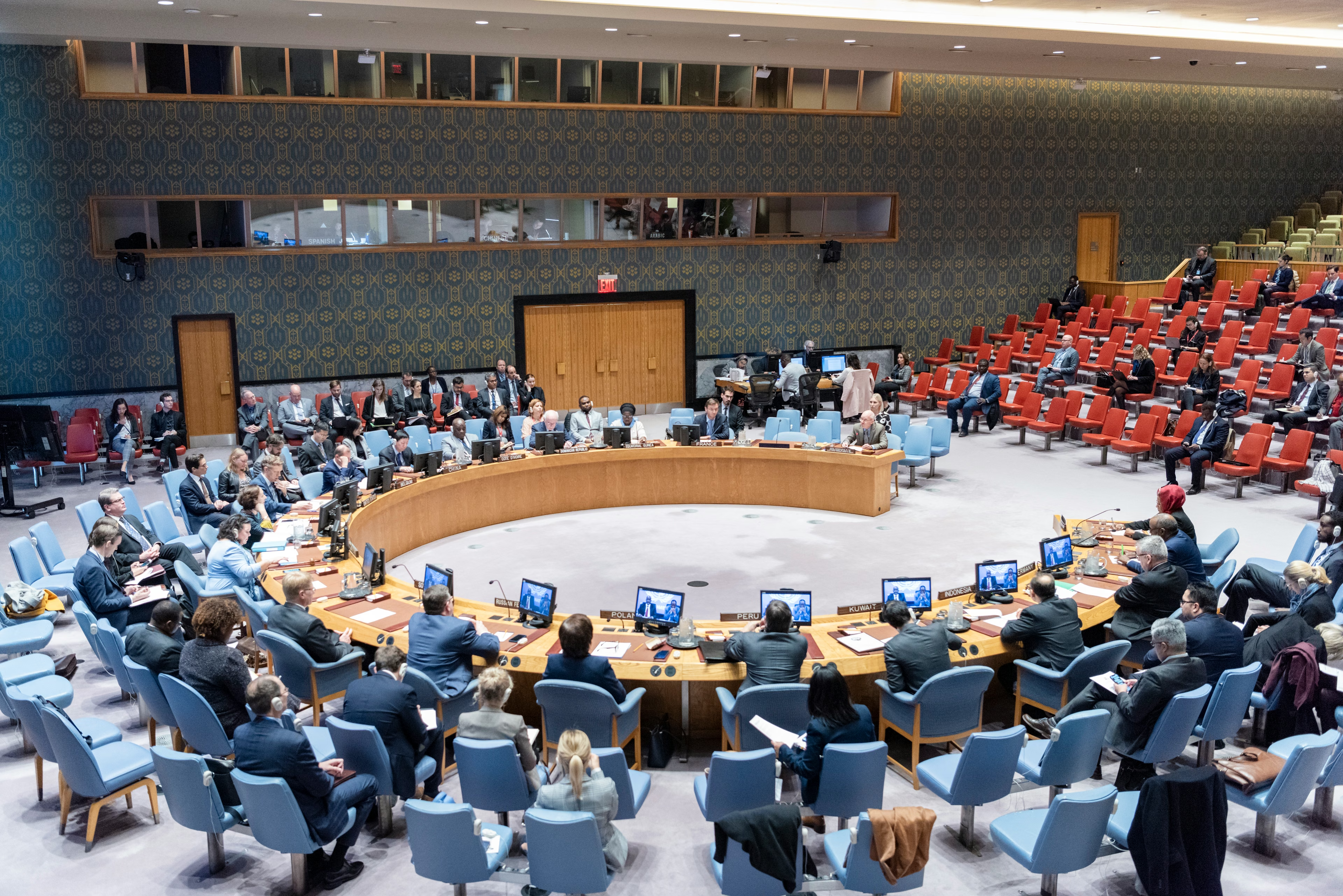
The Security Council on Monday heard Mari Yamashita’s first briefing since her appointment as the Secretary-General’s Senior Representative on the Iraq-Kuwait humanitarian file, as speakers pressed for progress in the search for people missing since Iraq’s 1990 invasion of Kuwait.
Yamashita, whose role was established under Resolution 2792 (2025), reported that 315 Kuwaiti and third-country nationals remain unaccounted for and that no identity has been confirmed since August 2023. She said commitments had been made but action delayed. A key witness linked to the Khamisiyah site, believed to hold the remains of 150 to 180 missing Kuwaitis, had revised his account and stopped cooperating, while interviews with eight former-regime officials that Iraq approved in July had yet to take place. As time passes, relevant witnesses and evidence become harder to find, making swift action imperative.
Kuwait’s Assistant Foreign Minister for Prisoners and Missing Persons Affairs told the Council the problem lay not only in scarce information, but also in Iraq’s failure to act on testimony already received. Yamashita said another potential witness, a former-regime official, was executed in February 2026 before the International Committee of the Red Cross could interview him.
Iraq’s representative attributed the lack of identifications not to ceased efforts or information withholding, but to the difficulty of the task itself, pointing to the reality that in other conflicts, missing people have often never been identified. Iraq announced a joint excavation in a new area of Khamisiyah to start October 27, 2026. Iraq also called for an agreed way to move the remaining work to the ICRC-chaired Tripartite Commission ahead of the 2028 review.
Council members urged measurable results. The United States and United Kingdom said they wanted the Tripartite Commission to adopt clear indicators before the Security Council’s review, due no later than June 30, 2028. Several members also called for renewed engagement through a joint committee on missing Kuwaiti property, including the national archives. Russia, by contrast, warned against politicizing the issue or expanding international oversight. Its representative said the mechanism’s future should depend on its results and saw no grounds for indefinite outside involvement in a matter Russia argued Iraq and Kuwait should resolve directly.
Sources
- UN DPPA — Mari Yamashita’s briefing, as delivered, 26 October 2026
- UN Web TV — Iraq/Kuwait, Security Council 10252nd meeting, 26 October 2026
- UN meeting transcript — automated speech recognition, not an official record
- Secretary-General’s letter S/2026/785, 1 October 2026; reporting period 1 April–15 September 2026
- Security Council Resolution 2792 (2025), 17 September 2025
- UK statement — Ambassador Kate Foster, Security Council, 26 October 2026