FREE. FAIR. GLOBAL.
UN Commission Classifies Russia’s Deceptive Recruitment of Foreign Fighters as “Human Trafficking”
The UN commission found evidence of deceptive recruitment involving nationals from 29 countries and assessed related human-rights violations.
Reporting by Mayah Ramadan; edited by GLOBAL.
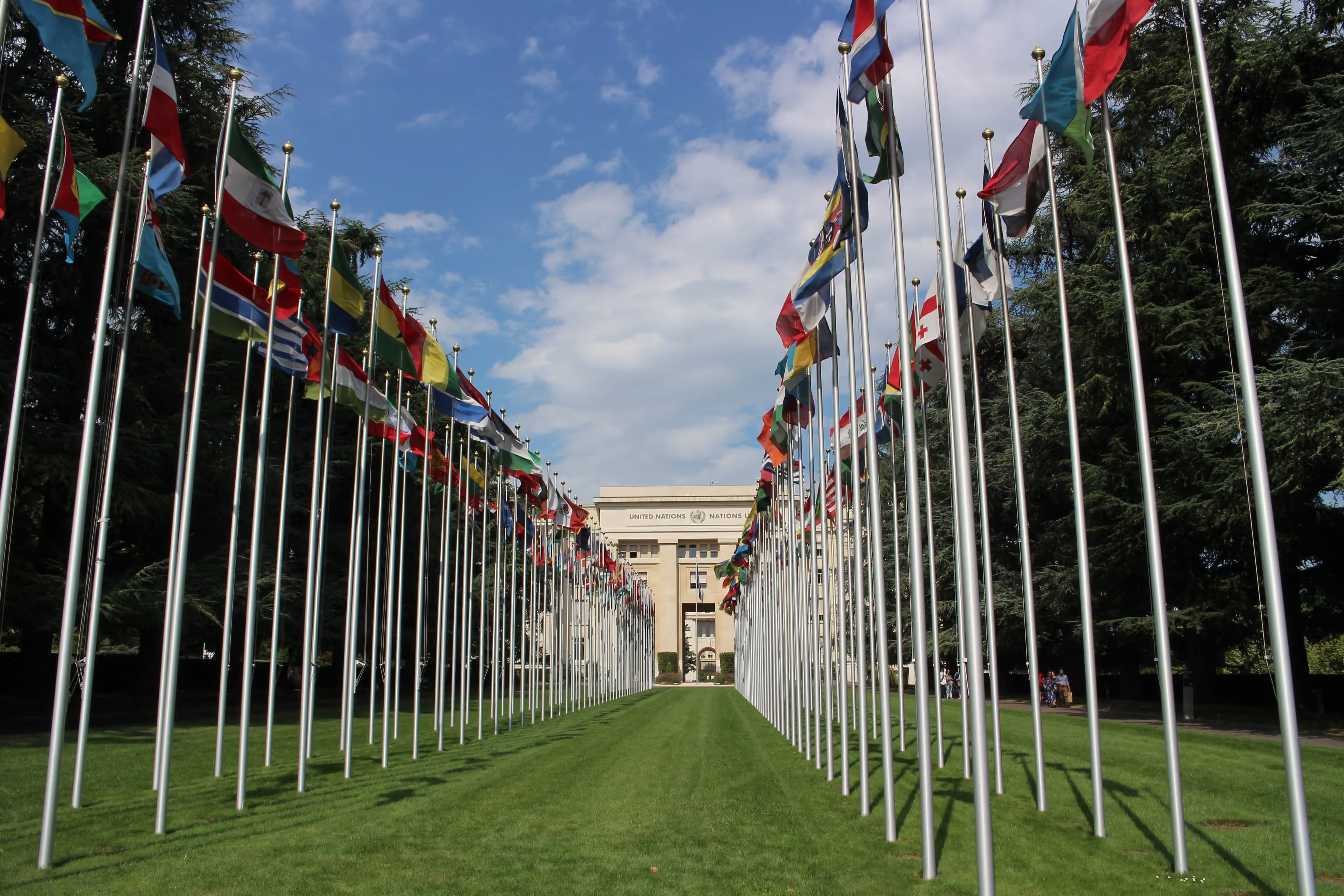

Reporting date: October 26, 2026 UN commission press conference
Lightly edited by GLOBAL. from Mayah Ramadan’s submitted report, with factual corrections and source verification. The report covers the October 26, 2026 UN commission press conference. UN-hosted automated transcripts are not official records. The unsupported continental breakdown was omitted; the verified 29-country total is retained.
Alongside its findings on war crimes, the UN commission’s report describes Russia’s deceptive recruitment of foreign men as trafficking in persons. It found evidence involving vulnerable men from 29 countries, often from poor backgrounds, who were lured with false civilian job offers. Chair Erik Møse estimated that victims numbered in the thousands, although a precise figure was unavailable. The commission documented passport confiscation and men being forced to sign military contracts in Russian before being sent to dangerous tasks on the front lines.
A new report was presented by the United Nations Independent International Commission of Inquiry on Ukraine on Monday, October 26, 2026, finding that Russian authorities had recruited men from 29 countries through deception and coercion. Chair Erik Møse described a network that lures foreign men into Russia’s armed forces with promises of lucrative civilian employment. Upon arrival, these men are forced to sign military contracts in Russian, then handed over to the armed forces and deployed to the front lines.
The victims come from countries across several continents. The commission concluded that these operations constitute trafficking in persons and human rights violations. Møse further explained the damage by stating: “The departure, disappearance, injury, death or capture of the victims also have a long-lasting psychological impact on their families, who are carrying out intense search efforts to find their loved ones.”
These findings build on the commission’s earlier investigation presented in March 2026. Møse emphasized that the latest report provides a broader picture supported by additional evidence. He also clarified that the investigation focuses specifically on recruitment involving deception and fraud, rather than all foreign nationals serving in Russian forces.
The commission’s findings raise significant questions about international accountability and the exploitation of vulnerable populations. Commissioner Pablo de Greiff stressed that the evidence collected is available to member states and international accountability organizations for potential prosecutions.
At the briefing, the commission also covered Russian attacks on Ukraine’s energy facilities. De Greiff explained that Ukraine’s district-level heating systems magnify the impact of these attacks. Civilians were left without heating as temperatures fell to −21°C during the winter of 2025–2026. He said the commission assessed that Russian commanders knew the targeted heating facilities were indispensable to civilians and that the attacks were carried out with intent and pursuant to a state policy. The commission concluded that attacks intentionally directed against civilian objects amounted to war crimes.
Through this classification of human trafficking and related violations of international human rights law, the commission places the exploitation of foreign nationals within a broader framework of human rights violations, showing how the consequences of Russia’s war against Ukraine extend far beyond its eastern European borders.
Sources
- United Nations Web TV. “Independent International Commission of Inquiry on Ukraine – Press Conference.” October 26, 2026.
- United Nations Webcast Library. “Independent International Commission of Inquiry on Ukraine – Press Conference.” Auto-generated transcript, October 26, 2026.
- United Nations in Ukraine / OHCHR. “Russian authorities committed crimes against humanity through attacks on Ukraine’s energy infrastructure and trafficked foreign nationals to fight with their armed forces in Ukraine, says UN Commission of Inquiry.” October 26, 2026.
- United Nations in Ukraine / OHCHR. “UN Commission concludes that deportation and forcible transfer of Ukrainian children by Russian authorities, as well as enforced disappearances, amount to crimes against humanity.” March 12, 2026.