FREE. FAIR. GLOBAL.
The mandate has limits: America’s midterm reversal and the global far right
Democratic control of the next Congress creates a new check on Trump’s presidency. GLOBAL. examines the shift in Washington and what it could mean for the far right abroad.
GLOBAL. Politics & Affairs
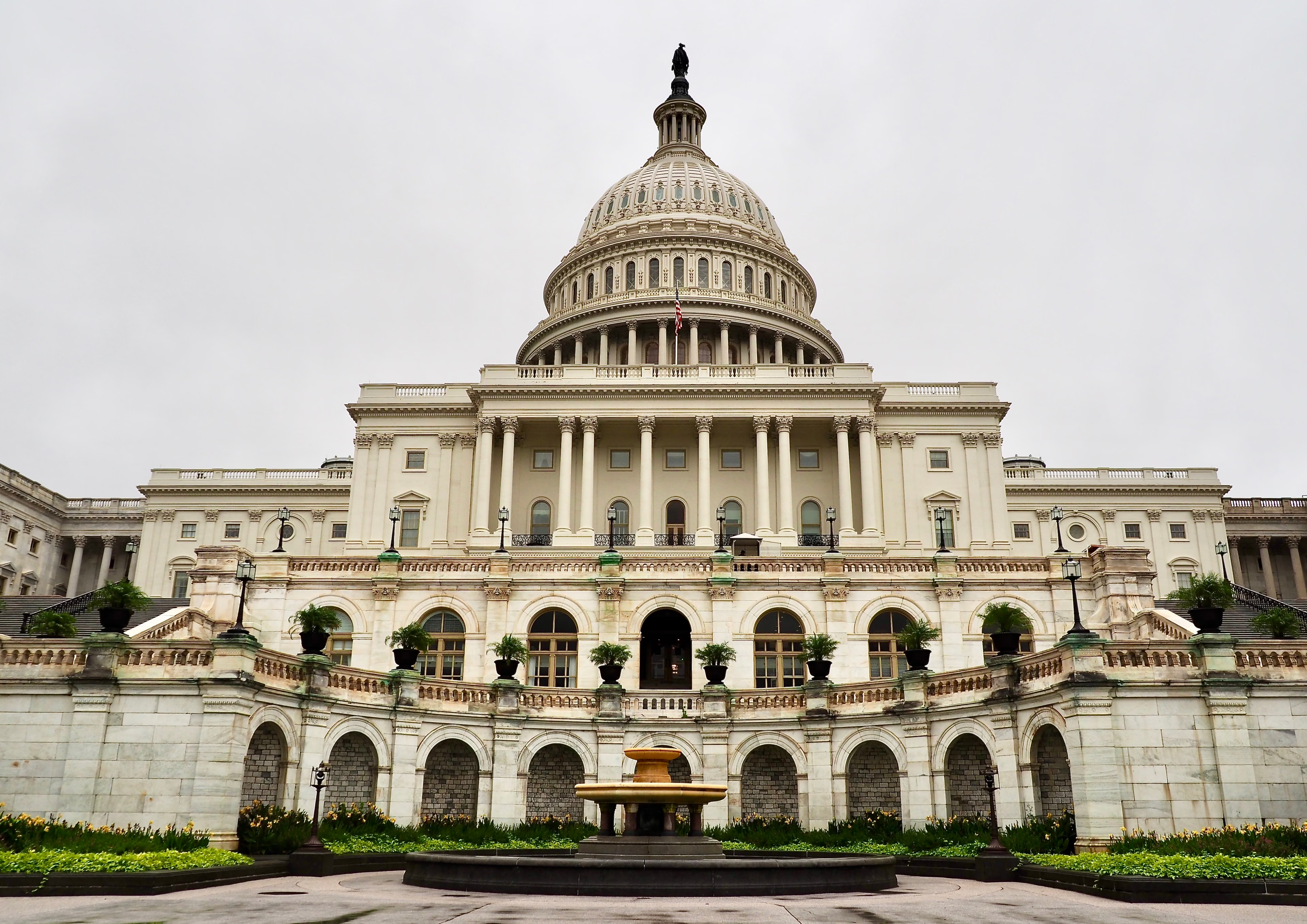

Results checked 4 November 2026 · AP race calls; counting and certification continue.
Analysis by GLOBAL. Politics & Affairs, based on linked public reporting and institutional sources. Results reflect Associated Press race calls as reported by ABC on 4 November 2026; they are not a certified final tally. New congressional terms begin on 3 January 2027. International implications are GLOBAL.’s assessment, not established effects on foreign elections. No original interviews are represented in this article.
The 2026 midterms have broken Republican control of Congress. The political precedent reaches beyond Washington: a claimed mandate can be challenged, but democratic repair still has to be built.
The American electorate has put a limit on Donald Trump’s second presidency. According to Associated Press race calls, Democrats have won control of both chambers of the next Congress. ABC’s AP results coverage records Senate gains in states including Texas, Kansas and South Carolina. Counting and certification continue, and a final seat tally would be premature. The central change is already substantial: the president’s party will face an opposition majority in both legislative chambers. ABC / Associated Press results
For the United States, that creates the prospect of a different relationship between presidential ambition and congressional consent. For the far right abroad, it presents a conspicuous challenge to the idea that nationalist politics moves in only one direction. GLOBAL.’s assessment is that the result weakens a political example of apparent inevitability. Whether it changes another country’s votes, governing alliances or policies will depend on choices still to be made.
A mandate that can be withdrawn
The first distinction is between an electoral result and the power that follows it. The new congressional terms begin on 3 January 2027; the reported outcome does not immediately replace the sitting Congress. That interval matters. It separates the political force of the verdict from the practical authority of the incoming majority. National Archives: Twentieth Amendment
The deeper American precedent is political rather than novel constitutional machinery. A presidential victory gives its winner an office, responsibilities and powers. Subsequent voters can withdraw legislative support without waiting for another presidential election. The midterms have made that distinction difficult to ignore. A party may claim to speak for the country while the country is changing the people authorised to speak for it.
That is especially significant when leadership is presented as an expression of a single, authentic national will. A democratic public contains competing interests, loyalties and judgments. Tuesday’s outcome is evidence of a changed congressional coalition, not proof that every Democratic voter shares one ideology or that every Republican voter embraces the far right. Reading the result honestly requires preserving those differences. The incoming majority will have to negotiate among its own supporters as well as confront its opponents.
What a different Congress can actually do
Congressional control changes who sets committee agendas, advances legislation and conducts oversight. A pre-election European Parliament Research Service briefing explained that an opposition majority could use hearings to scrutinise the administration, while a Democratic Senate could block presidential nominations. Its institutional explanation remains relevant after the vote, although its October forecasts are no substitute for November results. EPRS: powers and possible outcomes, 9 October
The Senate’s own account identifies investigations and the review of executive and judicial appointments as central powers. These provide concrete tests of the new majority’s intentions: which officials it questions, which records it seeks and which nominees it accepts. Oversight can establish a public record against which official explanations are measured. U.S. Senate: powers and procedures
The constraints are equally concrete. Trump retains the presidential veto; overriding it requires two-thirds in each chamber. A majority therefore provides leverage without guaranteeing that its legislative programme becomes law. Ordinary Senate legislation also generally faces a 60-vote threshold to end debate under existing rules. National Archives: veto and override; U.S. Senate: cloture
The election does not itself cancel executive orders, reverse judicial decisions or remove a president. The House’s impeachment power and the Senate’s trial function remain separate constitutional processes. The practical question is how consistently the incoming Congress uses its lawful tools, and whether the executive complies with legitimate scrutiny. Calling that contest finished would obscure the work the result has made possible. U.S. Senate: impeachment
Accountability has to reach ordinary life
An opposition can win by collecting reasons to reject a government. Governing a majority requires deciding which problems it will address first. For Democrats, the danger is to treat the scale of the reversal as a complete answer to that harder question. Voters can agree that an incumbent has failed while disagreeing about taxes, public services, immigration or the proper role of government.
A useful standard for the incoming Congress would connect scrutiny with consequences. An inquiry into public spending should explain who benefited and what safeguards could prevent abuse. A dispute over administration policy should make clear which decisions Congress can change, which require presidential agreement and which belong in court. That would give citizens a way to distinguish serious accountability from the manufacture of another political spectacle.
The same discipline applies to affordability. The new majority will have to explain which proposals could alter household costs, over what period and through what authority. Promising immediate relief from every pressure would create an expectation its institutional position cannot ensure. Sustaining the coalition that delivered this result will require an account of progress that remains intelligible when bargaining slows it down. Electoral rejection supplies an opening; material improvements must earn their own legitimacy.
The international claim of inevitability
The international connections are visible in the movements’ own organising. Before Hungary’s April election, CPAC Hungary’s organisers advertised Trump’s video support for Viktor Orbán and appearances by figures including Germany’s Alice Weidel and Spain’s Santiago Abascal. Their account presented the gathering as evidence of a global political majority. That is a partisan claim, but the event itself documents a network in which national victories are offered as encouragement across borders. CPAC Hungary: organisers’ 2026 account
This is where the American result acquires significance beyond Congress. A movement that borrows confidence from an overseas ally’s success must also confront that ally’s reversals. The inference is political: a visible defeat can make assertions of unstoppable momentum less convincing. It can create room for opponents, journalists and voters to question whether a supposedly dominant model is delivering what it promised.
Those effects cannot yet be measured from the American count. A foreign party could distance itself from Trump, emphasise local issues or argue that his opponents obstructed him. Another could double down on a confrontational style. Which response emerges will depend on its leadership, supporters and political system. The U.S. electorate has supplied an example that others can interpret; it has not chosen the interpretation for them.
Hungary is a comparison, with its own chronology
Hungary’s April election had already demonstrated the vulnerability of a leader celebrated by this international network. The National Election Office records 141 parliamentary seats for TISZA and 52 for Fidesz–KDNP. Orbán’s defeat preceded the American midterms by months. It cannot be described as a consequence of Tuesday’s vote. Hungary National Election Office: 12 April 2026 results
Reuters’ analysis after that election described the loss of an important model and ally for Europe’s far right, while also documenting the institutions and relationships built during Orbán’s years in power. Its reporting cautioned against assuming those networks would disappear with a change of government. That distinction is useful for understanding the American result as well. Reuters: Orbán’s defeat and international links, 14 April
The comparison supports a limited but consequential conclusion: political dominance can be challenged even after it has become a movement’s international selling point. Hungary and the United States reached different elections through different histories. Treating them as a single ideological wave would flatten the reasons citizens made their choices and the different institutions through which those choices operate.
What crosses borders, and what must be built locally
For opponents of the far right elsewhere, the most useful lesson may be the possibility of assembling a sufficiently broad alternative. That is an inference from the outcome, rather than a proven campaign formula. It does not establish that a particular slogan, candidate style or policy package can be exported. A party confronting a fragmented parliamentary system faces different choices from one competing for congressional districts.
The American result could also change how foreign governments assess Washington. Congress shapes military policy through spending and oversight, and the Senate scrutinises appointments and treaties. Yet presidents also enter executive agreements without Senate approval. A change of congressional majority therefore alters the bargaining environment without automatically rewriting every international commitment. U.S. Senate: military policy; treaties and executive agreements
On trade, security assistance and international cooperation, readers should watch for decisions rather than assume a new direction from the party label alone. A hearing may expose a problem without resolving it. A proposed spending restriction may become a negotiation rather than a final policy. The meaningful international shift will be found in enacted conditions, confirmed appointments, implemented decisions and the administration’s response to them.
The test begins in January
A large electoral reversal creates a temptation to announce democratic repair before it has been demonstrated. The stronger standard is whether the people who gain power accept limits on their own conduct. Investigations should be grounded in evidence. Rules should remain intelligible when they protect an opponent. Citizens who backed the losing party should retain their rights and their place in the political community.
The same standard should govern how the result is discussed abroad. Conservative parties, nationalist movements and the far right overlap in some settings and diverge in others. Applying one label indiscriminately makes analysis less exact. The relevant question is how a movement treats pluralism, lawful opposition and constraints on executive power, alongside the policies it proposes. An election can change the balance without resolving those arguments.
The precedent of November 2026 is an example of democratic correction still awaiting implementation. American voters have created the conditions for a stronger congressional check on the presidency. Movements abroad that treated Trump’s success as proof of their own destination now have a reversal to explain. The coming test is whether this limit on a mandate becomes something durable: accountable decisions, practical improvements and a political system in which losing an election remains an ordinary consequence of failing the people who cast the votes.
Sources
- ABC News / Associated Press — U.S. midterm results, 4 November 2026
- National Archives — Twentieth Amendment
- European Parliament Research Service — Understanding the 2026 U.S. midterms, 9 October 2026 (pre-election institutional briefing)
- U.S. Senate — Powers and procedures
- National Archives — Presidential veto and congressional override
- CPAC Hungary — Organisers’ account of the 2026 event (partisan primary source)
- Hungary National Election Office — 12 April 2026 parliamentary result
- Reuters via Investing.com — Orbán’s defeat and the international far right, 14 April 2026
- U.S. Senate — Filibusters and cloture
- U.S. Senate — Impeachment
- U.S. Senate — Congress and military policy
- U.S. Senate — Treaties and executive agreements