FREE. FAIR. GLOBAL.
From the Congo Wars to Kivu: How History, Minerals, and the Battery Age Keep Feeding the Conflict
The war in eastern Congo did not begin with today’s headlines, nor can it be reduced to a single rebel group, a single mineral, or a single foreign power. The fighting in Kivu is the latest phase of a much older political breakdown whose foundations were laid during the First and Second Congo Wars and then sustained by weak governance, re
GLOBAL. Staff
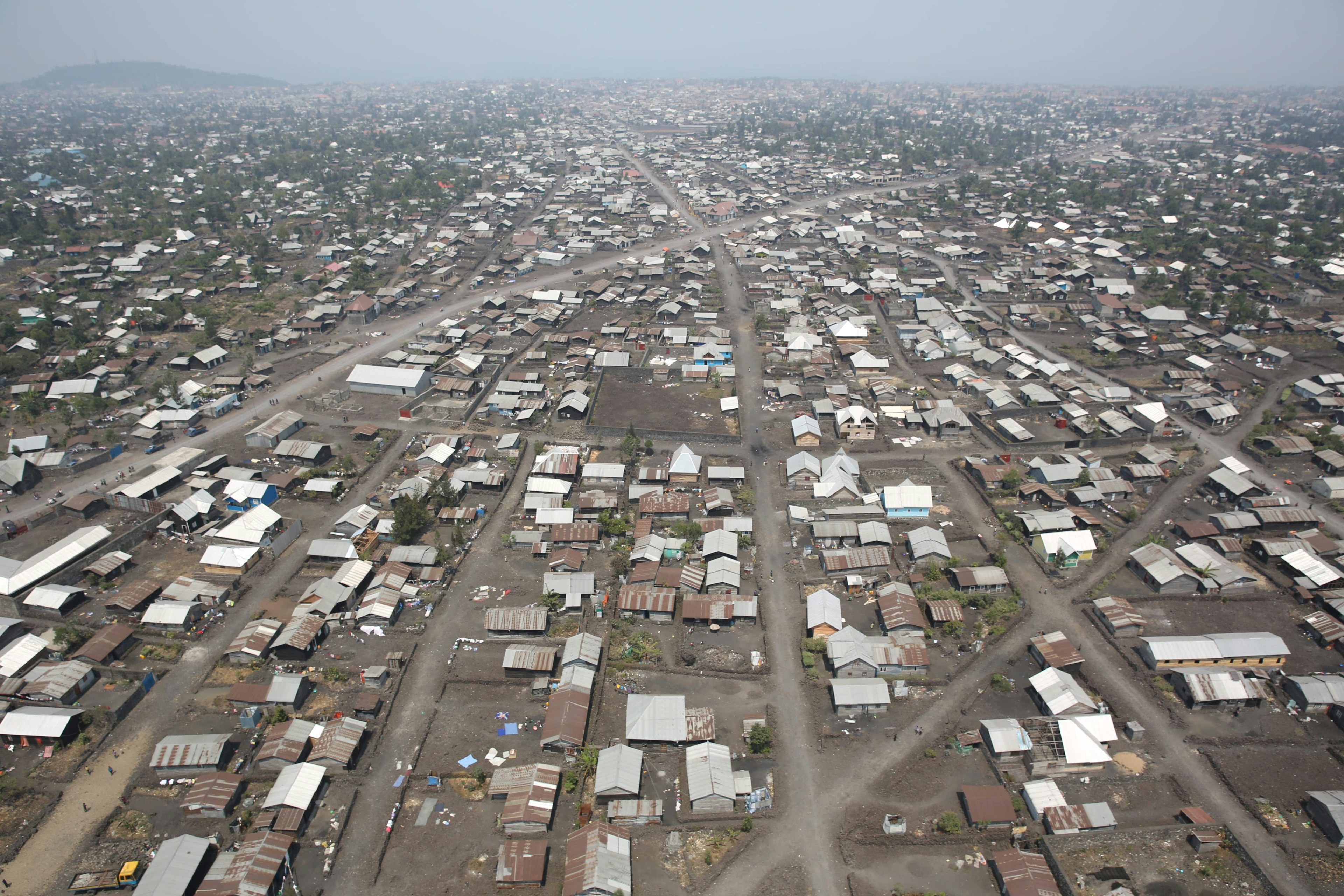

The war in eastern Congo did not begin with today’s headlines, nor can it be reduced to a single rebel group, a single mineral, or a single foreign power. The fighting in Kivu is the latest phase of a much older political breakdown whose foundations were laid during the First and Second Congo Wars and then sustained by weak governance, regional intervention, and the global market for strategic minerals. To understand why violence persists, it is necessary to see eastern Congo not as a peripheral tragedy but as one of the central places where world history, post-genocide security politics, and the modern technology economy collide.
The first major rupture came after the 1994 Rwandan genocide. The Council on Foreign Relations notes that nearly two million Hutu refugees crossed into what was then Zaire, and among them were extremist elements who reorganized militias inside eastern Congo. Rwanda’s new government treated those armed networks as a continuing threat.
That perception, combined with Mobutu Sese Seko’s collapsing rule and the ambitions of regional actors, helped drive the First Congo War in 1996. Rwanda, Uganda, and other states backed Laurent Kabila’s rebellion against Mobutu, and when Kabila took Kinshasa in 1997, Zaire became the Democratic Republic of the Congo once again. But the first war solved little.
It removed one ruler and intensified a far wider struggle over authority, borders, and armed networks. Relations between Kabila and Kigali quickly deteriorated. In 1998 the Second Congo War began, drawing in multiple African states and transforming Congo into the center of a continental conflict.
The war formally ended in 2002, but its deeper legacy was fragmentation: armed groups remained active, borderlands stayed militarized, and state institutions never became strong enough to monopolize force across the east. That unfinished history is the bridge to today’s violence in Kivu. CFR explains that M23 is only the latest in a series of Rwanda-backed militant movements vying for territory and access to valuable resources in eastern Congo, and the group’s recent offensives underscore how unresolved the postwar settlement remains.
The present war is not a sudden deviation from peace. It is the continuation of a system in which external intervention, militia politics, ethnic fear, and extraction have long reinforced one another. Minerals sit at the center of that system, but not in the simplistic way they are often discussed.
The U.S. Government Accountability Office found in 2024 that armed groups and security actors in eastern DRC continue to profit from mining through taxes on access, charges on transit, control of roadblocks, extortion, and interference in artisanal mining, especially around gold sites.
The report is careful on causation. Minerals are not the sole root cause of violence. Weak governance, corruption, neighboring-state involvement, ethnic tension, and economic pressure all matter deeply.
But minerals are a major source of revenue that keeps conflict durable. That durability matters more now because eastern Congo is tied to global demand in a new way. The world’s appetite for batteries, electronics, and clean energy technology has turned mineral supply chains into strategic terrain.
CFR notes that the DRC is home to major reserves of cobalt, copper, zinc, and other minerals used in advanced electronics, and that growing reliance on these materials has increased incentives for both local and external actors to deepen their involvement in the conflict. In other words, the war in Kivu is not just a local contest over mines. It is linked to the infrastructure of modern life, from phones and laptops to electric vehicles and the wider energy transition.
That does not mean consumers cause the war in a direct linear way. A battery purchased in New York or Berlin does not automatically translate into a militia checkpoint in North Kivu. But the broader demand system matters.
The global market raises the value of territory, the profitability of smuggling, and the incentive for armed actors to insert themselves into extraction and transport chains. It also creates a moral contradiction at the heart of the clean technology era: a transition advertised as progressive and sustainable can still draw on supply chains shaped by coercion, opacity, and violence. The GAO report complicates one of the most common policy assumptions about this system.
It found no empirical evidence that the SEC conflict minerals disclosure rule reduced violence in eastern DRC, and it concluded that the rule was associated with a spread of violence around some artisanal gold-mining areas. Armed groups adapted. As oversight increased in some tantalum, tin, and tungsten chains, violence shifted toward gold, which is easier to smuggle, more portable, and harder to trace.
That finding is crucial because it shows how war economies evolve under pressure. Regulation can change behavior without ending the underlying incentives for violence. The mining question is therefore also a governance question.
Armed groups are not the only actors implicated. The GAO report notes that some elements of the Congolese security forces have also interfered in mining, imposed illegal taxes, and behaved in ways that resemble predatory armed networks. When the state itself is fragmented or compromised, the line between protection and exploitation becomes dangerously thin.
Foreign influence makes this even harder to resolve. CFR identifies Rwanda as the primary backer of M23 and describes eastern Congo as part of a longer cycle of Rwanda-backed militant competition for land and resources since the late 1990s. The GAO report likewise highlights the role of neighboring countries, especially Rwanda and Uganda, in exacerbating conflict through security interventions, smuggling networks, and broader strategic competition.
This means Kivu is never only a domestic Congolese crisis. It is also a regional contest shaped by post-genocide security logic and cross-border political economy. The result is a profoundly modern war.
It is fought by militias, armies, smugglers, and political elites. It unfolds in territory scarred by the aftershocks of genocide and continental war. And it is sustained in part by a global economy that wants the minerals beneath Congolese soil but often remains distant from the people living above it.
The most important historical truth is that the current Kivu conflict was not born yesterday. The Congo Wars normalized intervention and militarized extraction. The postwar settlement failed to build durable sovereignty in the east.
The battery age then gave this fractured landscape renewed international importance. That is why eastern Congo remains trapped between history and demand, between regional insecurity and global dependence. The path forward cannot be a public-relations version of ethical sourcing alone.
Transparency matters, but the evidence shows it is not enough. Nor can peace come from treating minerals as the single cause while ignoring governance, corruption, regional diplomacy, and local livelihoods. Any real strategy has to confront the full structure of the war: the armed networks, the neighboring-state agendas, the predatory political economy, and the supply chains that make the conflict profitable long after the world has learned to look away.
That is the hardest lesson of the Congo story. The devices and cars of the future are tied, however indirectly, to one of the unresolved wars of the past. Kivu is where the afterlife of the Congo Wars meets the material hunger of the twenty-first century.