FREE. FAIR. GLOBAL.
Coral Reforestation: The Climate Crisis Beneath the Ocean
Coral reefs rarely command the same attention as fires, storms, and rising seas, but they support marine life, protect coastlines, and sustain food security. Clayton Laney examines Caribbean coral decline and CLEAR Caribbean’s restoration work as evidence that climate damage is not always final.
Clayton Laney
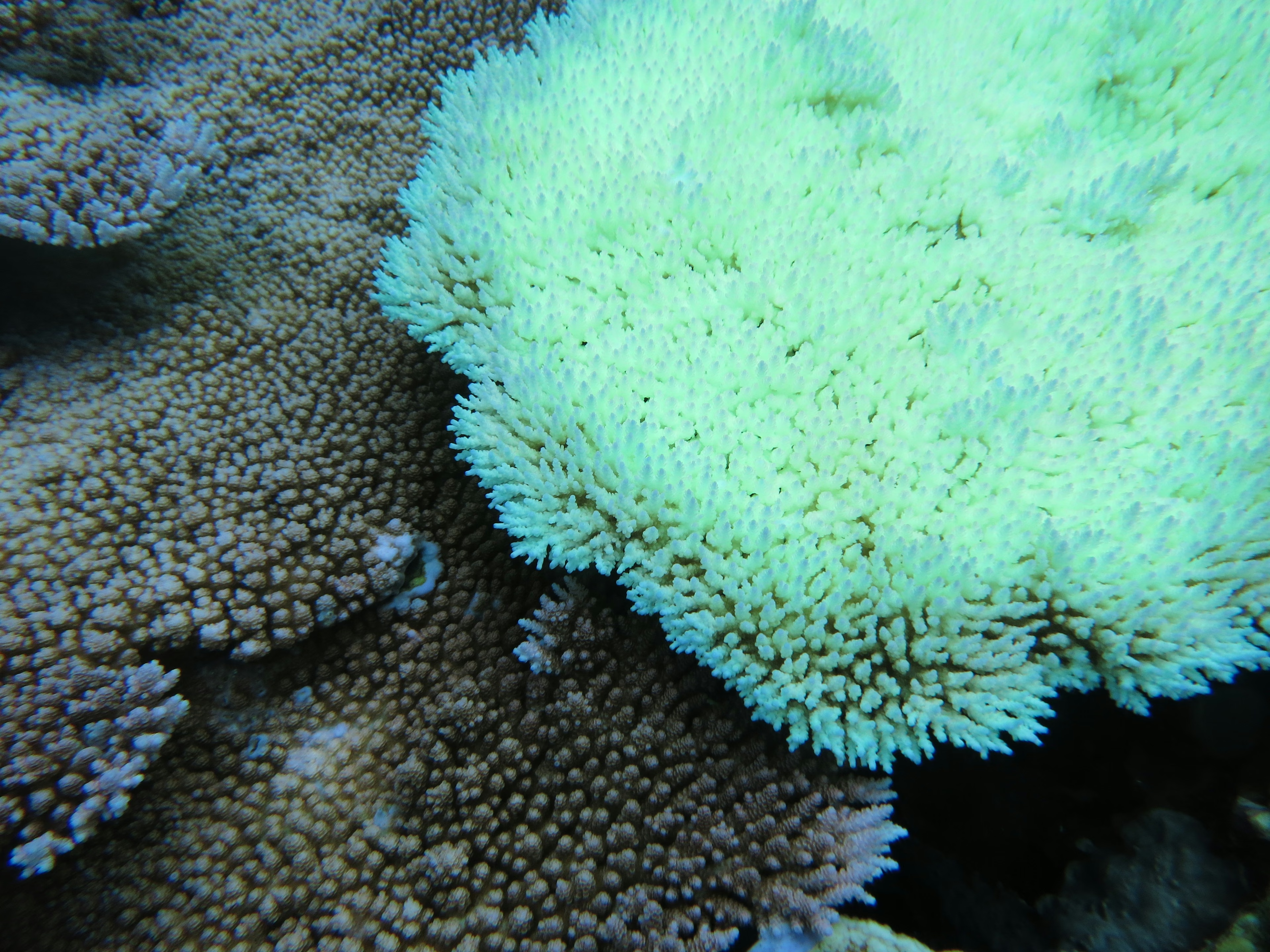

It is easy to believe that the world's gravest environmental crises happen above water. When researching such crises, it is easy to come across images of raging wildfires, rising water levels and destructive hurricanes. Coral reefs, hidden beneath the vast ocean surface, rarely command the same attention. Yet one of the most important climate crises of my generation is unfolding underwater, and not enough people are paying attention to it.
Before delving into the topic, I used to think of coral reefs as simply beautiful destinations for tourists and documentary crews. The more I researched them, the more I realized their importance to the entire global ecosystem. According to the United Nations Environment Programme, also known as UNEP, coral reefs support roughly 25 percent of all marine species, despite only covering less than 0.1 percent of the ocean floor. NOAA also identifies reefs as essential ecosystems that act as boundaries for coastlines to guard against storm damage and support millions of people that rely on them every day for food and livelihoods. The loss of a coral reef is not just a loss for the marine life that inhabits it, it is a loss of food security and climate resilience for a multitude of communities.
This loss is starting to become a reality, with many Caribbean nations experiencing the fallout. According to the Global Coral Reef Monitoring Network, the Caribbean has lost more than half of its living coral cover over the last several decades due to pollution, warming oceans and unsustainable fishing practices. NOAA Fisheries echoes these findings and warns that the increasing rate of both marine heat waves and coral bleaching events continue to threaten reefs throughout the Caribbean. While these statistics may paint a grim picture, they are only part of the equation. Across the region, conservationists are working to push back against reef decline. One organization in particular is demonstrating that coral restoration can move beyond conservation and become an investment in communities.
That is where CLEAR Caribbean has entered the conversation. CLEAR Caribbean, also known as the Centre for Livelihoods, Ecosystems, Energy, Adaptation and Resilience in the Caribbean, is a regional nonprofit organization that partners with local communities, governments and conservationists to restore coral reefs while working to equip residents with the tools needed to protect their communities from climate change for years to come. Through underwater coral nurseries and restoration projects, the organization is proving that ecosystems damaged from climate change are not necessarily permanently lost. According to CLEAR Caribbean, restoration efforts are designed not only to increase coral cover but also to strengthen local coastal resilience. UNEP's Coral Reef Restoration Guide similarly argues that restoration is most successful when it combines science with long-term community involvement, something that CLEAR Caribbean has strived to do in their efforts against coral degradation.
Our generation is often described as the climate generation, but meaningful action extends far beyond addressing only the mainstream ideas of climate change. The United Nations' Decade on Ecosystem Restoration identifies ecosystem restoration as one of the most important opportunities that the world has to address biodiversity loss, climate change and sustainable development simultaneously. Similarly, the UN Decade of Ocean Science for Sustainable Development argues that restoring the health of the ocean will require scientific innovation combined with willing participation of governments, community organizations and especially young people. The conversation surrounding the climate crisis has traditionally skewed towards deciding how to prevent further damage to the climate, however, coral restoration and the organizations like CLEAR Caribbean championing have showcased that the decision to restore is just as important.
CLEAR Carribean’s coral restoration initiatives have set this crisis apart from other environmental crises in that it offers visible evidence that climate damage is not final and that recovery is possible when communities work together towards it. In a world where global temperatures continue to rise and climate catastrophe seems inevitable, that is a reminder that is sorely needed.
Sources
- Original PDF: Clayton Laney, Coral Reforestation
- CLEAR Caribbean, Coral Restoration
- CLEAR Caribbean, Current Projects
- NOAA Fisheries, Corals
- NOAA National Ocean Service, How Does Climate Change Affect Coral Reefs?
- NOAA National Ocean Service, National Coral Reef Resilience Strategy
- UNEP, Coral Reefs
- Global Coral Reef Monitoring Network, Status of Coral Reefs of the World: 2020
- UNESCO, United Nations Decade of Ocean Science for Sustainable Development