FREE. FAIR. GLOBAL.
Europe Arms for 2030: Inside the EU's New Defense Program
A GLOBAL. explainer on the EU's defense readiness shift, the Readiness Roadmap 2030, the European Defence Fund, EDIP, joint procurement, drones, air defense, space, and the Eastern Flank.
GLOBAL. Staff
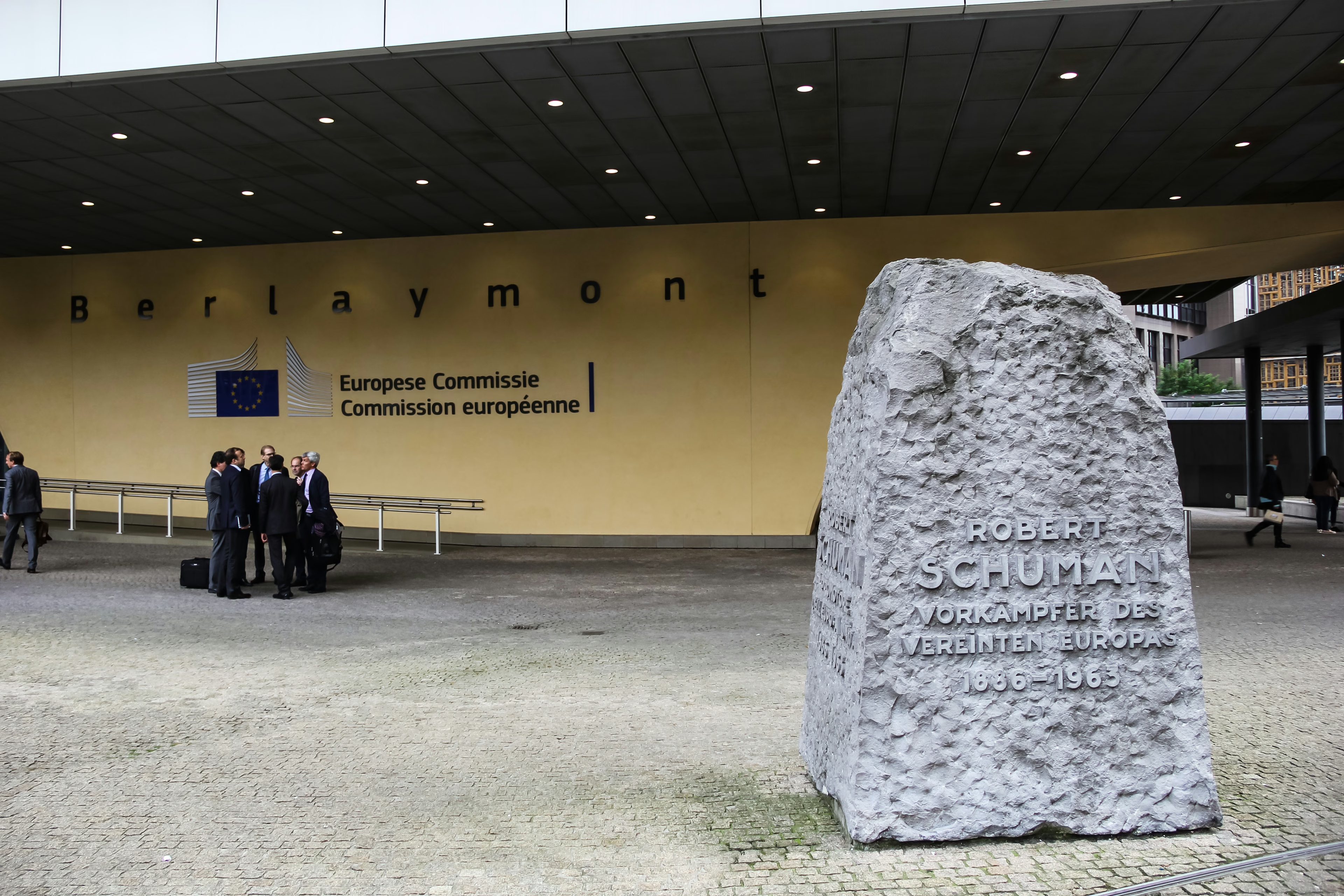

For most of its modern life, the European Union spoke the language of markets more fluently than the language of military power. It regulated, traded, enlarged, mediated, funded, and negotiated. Defense remained mostly national, NATO-centered, and politically sensitive. Russia's war against Ukraine did not erase that history, but it forced Europe to confront its limits. The result is a defense program that looks less like a symbolic aspiration and more like an industrial mobilization plan.
The center of the shift is the EU's Readiness Roadmap 2030. The European Commission describes it as a plan to close critical capability gaps by 2030 and organize defense readiness around flagship projects including Eastern Flank Watch, a European Drone Defence Initiative, a European Air Shield, and a European Space Shield. Those names matter because they show how Europe's threat model has changed: borders, drones, missiles, satellites, and industrial supply.
The roadmap is also unusually concrete about procurement. The Commission says joint procurement should converge toward a 35 percent target, and defense investment procured from the European Defence Technological and Industrial Base should reach at least 55 percent of total investment. In plain language, Europe is trying to buy together and buy more from Europe. That is not just strategy. It is industrial policy.
The European Defence Fund is one of the tools behind that shift. For 2021 to 2027, the EDF has a budget of nearly €7.3 billion, with €2.7 billion for collaborative defense research and €5.3 billion for capability-development projects. By late 2025, the Commission had committed almost €6.5 billion through the fund and adopted a 2026 work programme earmarking €1 billion for collaborative defense research and development.
EDIP, the European Defence Industry Programme, adds another layer. The Commission frames it as a way to forge Europe's defense industry, reinforce common procurement, and create a security-of-supply regime. Its logic is shaped by the ammunition shortages exposed after Russia's full-scale invasion of Ukraine: Europe could announce support faster than it could produce enough of what the war required.
This is the modern EU defense paradox. Europe is wealthy, technologically advanced, and collectively powerful, yet defense capability has often been fragmented across national systems, procurement habits, and industrial interests. A drone purchased by one state, an air-defense system prioritized by another, and a munition stockpile planned by a third do not automatically add up to continental readiness.
The new program is trying to solve that by making defense a shared production problem. It is not only about spending more. It is about standardizing, coordinating, financing, and creating demand signals that European companies can trust. If a factory does not know whether governments will keep buying, it will not expand. If governments do not buy together, they lose scale. If Europe depends too heavily on outside suppliers, readiness becomes vulnerable to politics beyond Europe.
The strategic meaning is larger than Ukraine, though Ukraine is the catalyst. The EU is preparing for a world in which American guarantees may be less predictable, Russia remains militarized, drones have rewritten battlefield economics, and space infrastructure is part of defense. The old assumption that Europe could outsource hard security while perfecting soft power is gone.
Europe's 2030 defense push will still face familiar obstacles: national sovereignty, budget politics, industrial rivalry, duplication with NATO, and the slow machinery of EU decision-making. But the direction has changed. The EU is no longer asking whether defense belongs inside the European project. It is asking whether the European project can survive without it.