FREE. FAIR. GLOBAL.
GA First Committee 1st Plenary Meeting
Member states clashed over working methods, speaking limits and meeting schedules as the UN General Assembly’s First Committee opened its 81st session.
Katherine Knisely
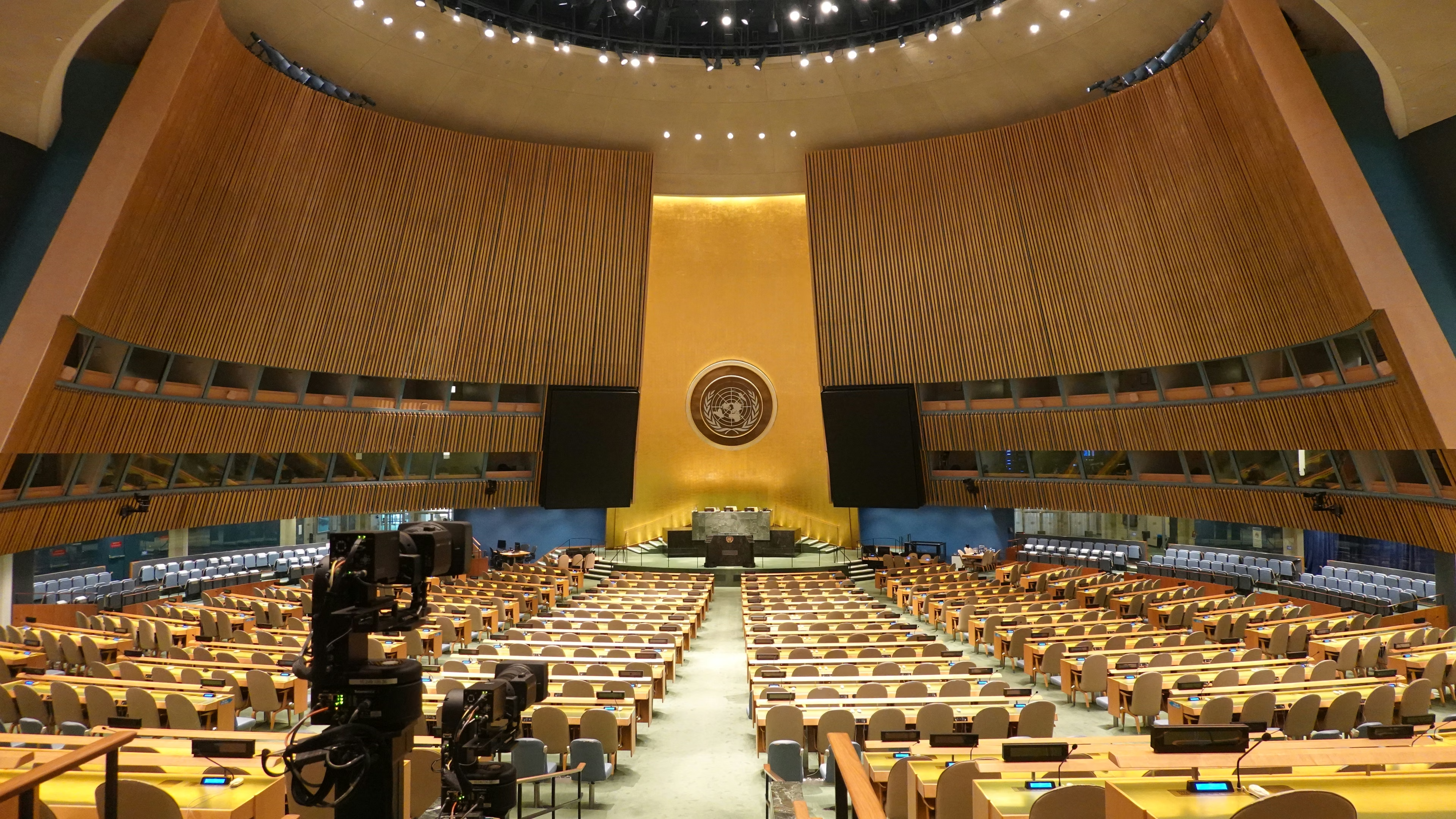

Member states clashed over working methods, speaking limits and meeting schedules as the UN General Assembly’s First Committee opened its 81st session.
The opening plenary of the UN General Assembly’s First Committee (Disarmament and International Security) saw member states clashed sharply over proposed working methods, speaking limits, and meeting schedules for the 81st session.
Committee Chair Lok Bahadur Thapa of Nepal opened the session by introducing the draft Programme of Work and Timetable (A/C.1/81/CRP.1), which proposed reducing total meetings and maintaining shortened statement limits due to the UN’s liquidity crisis. However, the proposal met immediate resistance, preventing consensus on the draft programme of work.
Leading the opposition, the Russian Federation, supported by delegations including Iran, North Korea, Belarus, and Nicaragua, rejected the proposal. Moscow argued that shortened statement limits and reduced meeting counts implemented during the 80th session were emergency measures that must not set a permanent precedent. The Russian delegate insisted that past time cuts failed to optimize work, reduced substantive debate to slogans and politically motivated accusations, and heightened mistrust among states. Russia further attributed the UN’s financial distress directly to late payments by major contributors, specifically targeting the United States.
Conversely, the United States and Western allies, including the United Kingdom, Lithuania, and Belgium, firmly defended the efficiency measures, asserting that the condensed schedule during the previous session proved the committee could fulfill its mandate effectively within 20 business days. Western delegates urged the committee to push reform further by strictly enforcing speaking limits, grouping rights of reply at the end of thematic clusters to prevent endless debate, and transitioning technical resolutions to a biennial or triennial schedule. Responding to claims that efficiency measures destroyed multilateral trust, Czechia countered that growing geopolitical friction stemmed from other long-term causes rather than procedural time limits.
Developing nations and the African Group took a nuanced stance, warning against sacrificing state participation for administrative speed. Senegal highlighted how compressed schedules force smaller delegations to abandon critical thematic discussions, noting it could only attend two thematic debates last year compared to its usual five. Other developing states noted that a shift toward uninterpreted informal consultations privileges larger, English-speaking delegations. Seeking a middle ground, Namibia proposed a one-minute increase across all statement categories as a pragmatic compromise.
Disagreements also centered on procedural mechanisms such as the "right of reply." Russia, Cuba, and Nigeria insisted that restricting rights of reply infringes upon national sovereignty, while Western states argued the mechanism is frequently abused to circumvent statement limits and restate national positions. Similarly, proposals for biennial or triennial consideration of technical resolutions drew mixed reactions, supported by Singapore, Egypt, and South Africa as sensible rationalization, while Cuba and India raised concerns about potential limits on sovereign initiative.
Unable to achieve consensus, Chair Lok Bahadur Thapa suspended the procedural debate, deferring CRP.1 to informal consultations among the Bureau and member states, with formal deliberations on procedural issues scheduled to resume October 6.