FREE. FAIR. GLOBAL.
New York City: The Port That Became a Modern Operating System
A landmark GLOBAL. history essay on how New York City grew from Lenape homeland and Dutch trading post into a five-borough metropolis whose old systems still shape housing, finance, immigration, culture, and power today.
GLOBAL. Staff
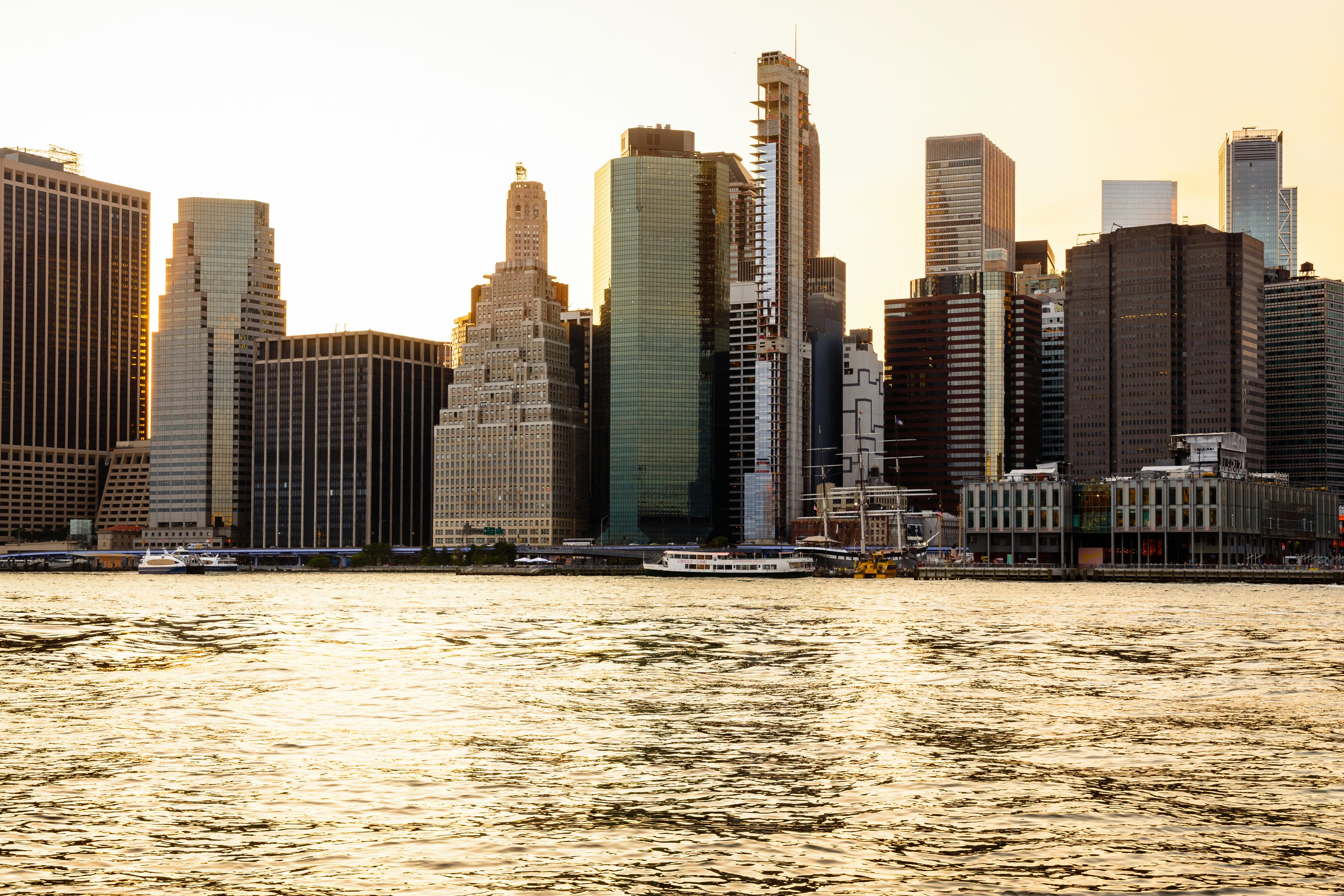

New York City is often described as if it were inevitable: the skyline, the harbor, Wall Street, the subway, the boroughs, the cultural speed. But the city was not inevitable. It was assembled through trade, conquest, migration, speculation, public works, political compromise, and a narrow vote that changed the map of American urban life. The modern city still carries every layer of that construction.
Before it was New Amsterdam, before it was New York, Manhattan was part of a wider Indigenous world. The Lenape and other Native communities lived around the harbor, rivers, wetlands, and islands that European traders later recognized as a natural commercial machine. The Dutch did not invent the city's geography. They converted it into a trading system. New Amsterdam grew at the southern tip of Manhattan as the capital of New Netherland, a settlement tied to the Dutch West India Company, Atlantic commerce, slavery, and the logic of a port.
That early port identity mattered because New York's modern power still begins with circulation. Ships became railroads, railroads became tunnels, tunnels became subways, and finance became a second harbor through which capital could move faster than cargo. By the time English control renamed the settlement New York, the city had already learned the habit that defines it now: absorb the world, price the world, and turn movement into power.
The defining modern turn came on January 1, 1898, when Manhattan, Brooklyn, the Bronx, Queens, and Staten Island were joined into the City of Greater New York. The official city archaeology timeline notes that consolidation had been debated as far back as 1820 and that Brooklyn resisted hard, fearing its independent identity would be smothered. The referendum passed in Brooklyn by only 277 votes. Modern New York was born from a margin small enough to feel accidental.
That narrow vote created the five-borough city that still governs everything from policing and schools to rent politics and infrastructure. It also created a central contradiction. New York is one city, but it is never only one city. Brooklyn's resistance did not disappear after 1898. It became a permanent feature of the civic personality: borough pride, neighborhood sovereignty, resentment toward Manhattan, and the belief that the city is strongest when it is also fragmented.
The twentieth century added the systems that make present-day New York recognizable. Bridges and tunnels hardened commuting patterns. The subway made the metropolis legible to working life. Public housing, zoning, highways, and parks sorted people and opportunity across space. Immigration remade language, food, religion, labor, and politics over and over again. The city became an operating system for modernity: dense, unequal, creative, expensive, resilient, and always under repair.
Today New York is home to about 8.58 million people, according to the city's planning department and the Census Bureau's July 2025 estimate. That number is more than population trivia. It explains the pressure behind the housing crisis, the scale of the transit system, the competition for public space, and the reason local decisions often feel national. New York is a city where municipal policy becomes a global signal.
The modern-day connection is therefore not nostalgia. New York's past is active infrastructure. The port explains finance. Consolidation explains borough politics. Immigration explains cultural reach. Public works explain both mobility and inequality. The skyline is not just architecture. It is the visible edge of centuries of decisions about land, labor, risk, and who gets to belong.
That is why New York remains difficult to govern and impossible to reduce. It is a city built by people who arrived, were displaced, were exploited, organized, built, traded, resisted, and stayed. Its history is not behind it. It is under the sidewalk, inside the subway map, written into property lines, and reflected every time the city asks the same question in a new century: who is New York for?