FREE. FAIR. GLOBAL.
Taiwan: The Island the World Cannot Ignore
Taiwan is often described as a flashpoint. That is true, but incomplete. This OneWorld feature traces the island's Indigenous foundations, colonial crossings, authoritarian decades, democratic transformation, UN exclusion, regional UN work, and the geopolitics that make Taiwan one of the most important questions in the world.
GLOBAL. Editorial Desk
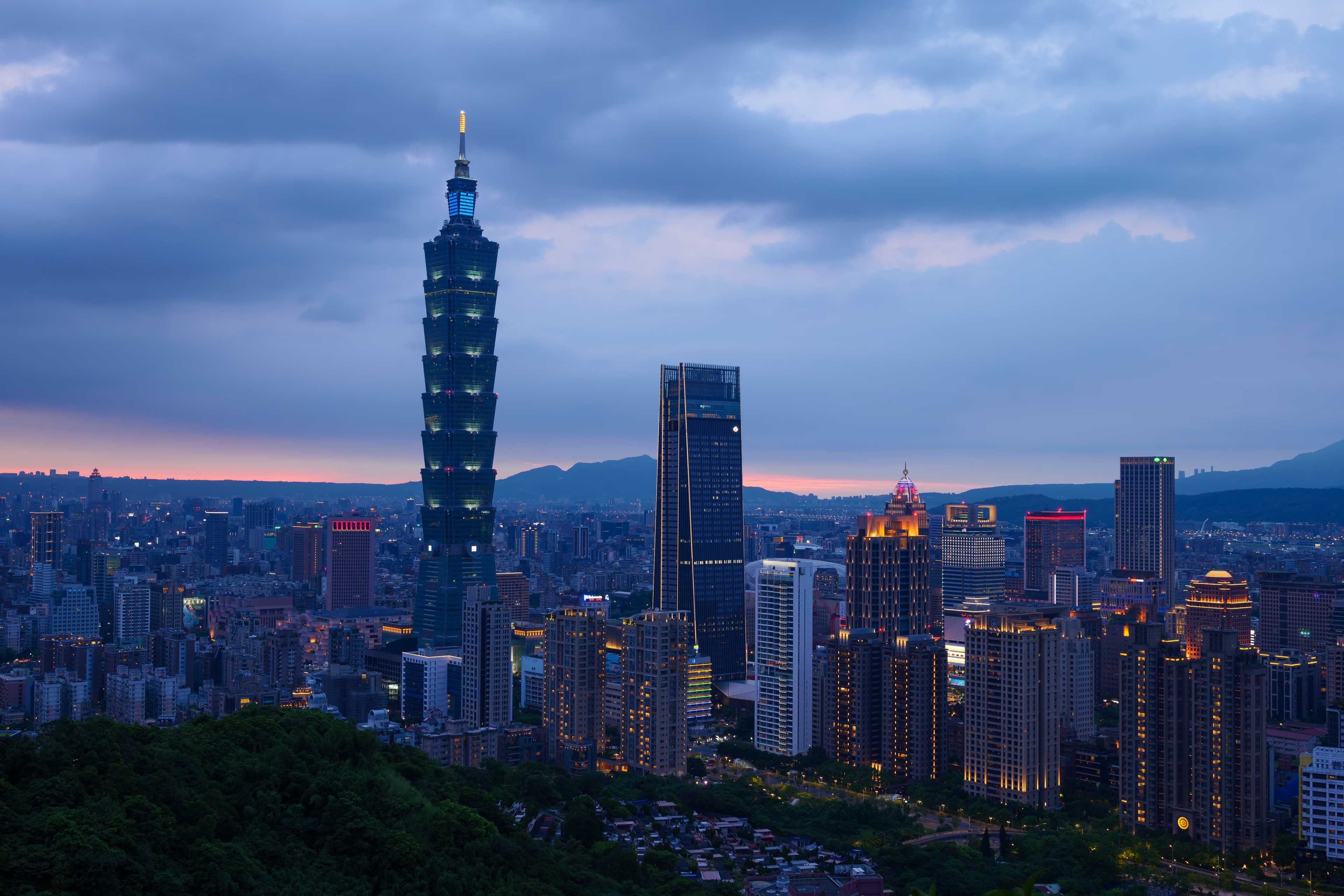

Taiwan is often introduced to the world as a crisis waiting to happen. A war game. A supply-chain risk. A diplomatic phrase. A line on a map that presidents, generals, diplomats, and markets watch with unusual fear. But Taiwan is not only a flashpoint. It is a place: mountainous, urban, Indigenous, democratic, contested, commercially central, and historically layered. To understand Taiwan only as a possible battlefield is to miss the first truth about it: people live there, remember there, vote there, work there, mourn there, and imagine futures there.
That is why Taiwan matters to OneWorld. The island forces the international system to confront questions it has never fully resolved. What happens when a democracy of more than 23 million people is central to the world economy but remains outside the United Nations? What does self-government mean when the world's most powerful governments use careful diplomatic language to avoid triggering conflict? How should the UN Charter's promises of peaceful settlement, sovereign equality, and restraint on the use of force be read in a place where legal status, historical memory, and military pressure all collide? [2]
The story begins long before modern states. Taiwan's first peoples are Indigenous Austronesian communities whose presence predates Chinese, Dutch, Spanish, Japanese, and modern republican rule by millennia. Their languages and cultures connect Taiwan to a wider Pacific world, reminding readers that the island's history is not simply a chapter in Chinese, Japanese, American, or Cold War history. Taiwan has always been an oceanic crossroads as much as a territorial prize. [3]
European sailors gave the island the name Formosa in the 1500s. The Dutch established a base in southern Taiwan in 1624, and the Spanish established a foothold in the north in 1626. In 1662, Zheng Chenggong, known in the West as Koxinga, expelled the Dutch. Qing forces later took control of parts of western and northern Taiwan in 1683, and Taiwan became a Qing province in 1885. These dates matter because they show a place repeatedly shaped by migration, empire, commerce, and military competition, not a static territory untouched by history. [3]
In 1895, after the First Sino-Japanese War, the Qing ceded Taiwan to Japan under the Treaty of Shimonoseki. Japanese rule transformed the island through infrastructure, education, policing, industrial development, and colonial coercion. Then came the collapse of empire. The Republic of China, founded in 1912, accepted Japan's surrender in Taiwan after World War II. In 1949, after losing the Chinese Civil War on the mainland, the ROC government relocated to Taiwan with roughly 1.2 million people. Taiwan then became the base of a state that claimed China while governing an island whose own political identity would change dramatically over the next decades. [3]
The postwar transition was not peaceful or simple. The 1947 February 28 suppression and the long White Terror left deep wounds. Martial law lasted until 1987. The Temporary Provisions that empowered authoritarian rule were abolished in 1991. Full elections for representative bodies followed, direct presidential elections began in 1996, and the 2000 election produced Taiwan's first transfer of executive power from the Kuomintang to the Democratic Progressive Party. Taiwan's modern identity cannot be understood without this movement from one-party authoritarianism toward one of Asia's most vibrant democracies. [3]
The United Nations question is the hinge of the whole story. In 1971, the UN General Assembly adopted Resolution 2758, titled 'Restoration of the lawful rights of the People's Republic of China in the United Nations.' The resolution recognized the representatives of the PRC as the only legitimate representatives of China to the UN and expelled the representatives of Chiang Kai-shek from the seat they held. In practical terms, the ROC lost the China seat at the United Nations, and Taiwan has remained outside UN membership ever since. [1]
This is where careful language matters. Resolution 2758 settled who represents China at the UN. It did not make Taiwan a UN member. It also did not create a simple daily answer to the democratic, humanitarian, public health, aviation, climate, and security questions raised by Taiwan's exclusion from many international forums. In diplomatic practice, governments and institutions have built a dense architecture of ambiguity around the island because clarity can itself become dangerous.
The People's Republic of China argues that Taiwan is part of China and that the one-China principle is the political foundation for eventual reunification. In its 2022 white paper, Beijing stated that Taiwan has never been a state and that its status as part of China is unalterable. The same paper says China will strive for peaceful reunification but will not renounce the use of force, reserving the option of taking necessary measures under what it calls compelling circumstances. [5]
Taiwan's official historical account tells a different story of lived sovereignty. It emphasizes that the PRC has never exercised sovereignty over Taiwan or the other islands administered by the ROC. It also frames Taiwan's democratic development as the product of elections, civil society, constitutional change, and local political choice. That difference is not a minor disagreement. It is the center of the conflict: one side describes an unfinished civil war and national reunification; the other lives as a self-governing democracy whose people expect their future not to be decided by coercion. [3]
The United States sits inside this tension through law, arms, commerce, and strategic ambiguity. The Taiwan Relations Act, enacted in 1979 after Washington shifted diplomatic recognition to the PRC, says peace and stability in the Western Pacific are in the political, security, and economic interests of the United States and matters of international concern. It also states that the U.S. decision to establish relations with the PRC rested on the expectation that Taiwan's future would be determined by peaceful means, and it directs the United States to provide Taiwan with defensive arms and maintain capacity to resist force or coercion that would jeopardize Taiwan's security or social and economic system. [4]
That framework does not make Taiwan a formal U.S. treaty ally. It does something more ambiguous: it makes Taiwan's security a permanent American concern without removing all uncertainty about what Washington would do in a war. Ambiguity is supposed to deter both sides: Beijing should not assume the United States would stay out, while Taipei should not assume unconditional support for declaring a new legal status. Whether that balance can hold under rising military pressure is one of the great security questions of this century.
The UN's role around Taiwan is therefore both present and absent. It is absent because Taiwan is not represented as a UN member state and cannot participate normally across the system. It is present because UN principles and UN regional work shape the environment around Taiwan. The Charter commits members to settle disputes by peaceful means and refrain from the threat or use of force against the territorial integrity or political independence of any state. Even when Taiwan's statehood is disputed, the Charter's peace-and-security logic still matters because conflict in the strait would endanger the region and the world. [2]
UN agencies also work across Asia and the Pacific on problems that do not stop at diplomatic boundaries. ESCAP serves as the UN's regional hub for Asia and the Pacific, supporting cooperation among 52 member states and 9 associate members through knowledge, technical assistance, capacity-building, and implementation of the 2030 Agenda. UNDP's Regional Programme for Asia and the Pacific supports sustainable development through priorities including a healthy planet, prosperity, effective governance, crisis resilience, digital transformation, gender equality, and sustainable finance. [8] [9]
Disaster risk is another regional issue. The UNDRR Regional Office for Asia and the Pacific works with governments, UN Country Teams, regional organizations, and other partners to protect people from disasters and build resilience across 39 countries and 13 territories. Taiwan is highly exposed to earthquakes, typhoons, landslides, water stress, coastal risks, and energy vulnerabilities. A serious regional approach to resilience cannot pretend geography follows diplomatic recognition perfectly. [10]
Public health shows the same problem. A World Health Assembly document on inviting Taiwan to participate as an observer noted that Taiwan had been invited as an observer for eight consecutive years from 2009 to 2016, and argued that Taiwan should have fuller access to WHO meetings, mechanisms, and activities. The argument was not symbolic. Disease surveillance, clinical networks, laboratories, and epidemic response become weaker when a highly connected society is not fully included in the channels that move health information quickly. [6]
This is the educational heart of the Taiwan issue: the world has created an international system built around states, but many of the world's most important problems are not neatly contained by recognized borders. Viruses do not ask about diplomatic status. Typhoons do not read UN seating charts. Supply chains do not pause for legal ambiguity. Cyberattacks, misinformation, shipping disruption, and military accidents can all move from one island into the entire international system.
Geopolitically, the Taiwan Strait is one of the most consequential waterways on Earth. International Crisis Group describes the status quo as under growing stress, with rising Chinese military, economic, and diplomatic pressure, near-daily military activity around Taiwan since 2020, and a risk that accidents or miscalculation could escalate in the absence of communication channels. It also notes that more than one-fifth of global maritime trade, about $2.45 trillion in goods annually, passes through the Taiwan Strait, while Europe and much of the global economy depend heavily on Taiwan's advanced semiconductor production. [7]
Semiconductors are often discussed as if chips themselves are the whole issue. They are not. They are a way of seeing interdependence. Taiwan's factories help power phones, cars, medical devices, defense systems, data centers, artificial intelligence, and the digital economy. But the deeper point is that the island has become a place where democracy, deterrence, manufacturing, shipping, and identity overlap. A conflict there would not be regional in consequence. It would be global almost immediately.
The military geography is unforgiving. Taiwan lies close enough to the Chinese coast for pressure to be constant, but far enough across rough water to make invasion immensely complex. Japan's southern islands, the Philippines, Guam, U.S. forces in the Pacific, European economic interests, and global shipping routes all form part of the wider theater. This is why diplomats speak endlessly about preserving the status quo. The phrase sounds dull, but in Taiwan it means preventing a unilateral change by force and preventing political moves that make force more likely.
For Beijing, Taiwan is tied to sovereignty, nationalism, history, regime legitimacy, and the unfinished story of the Chinese Civil War. For Taipei, Taiwan is tied to democracy, identity, security, and the right of its people to determine their future free from coercion. For Washington, Tokyo, Manila, Canberra, Brussels, and others, Taiwan is tied to alliance credibility, maritime order, trade, technology, and the fear that conquest would change the rules of the world. These perspectives do not fit together easily. That is why the issue is dangerous.
The UN cannot solve Taiwan by pretending these contradictions do not exist. It also cannot solve Taiwan by treating the island only as a procedural inconvenience. Its greatest contribution is not a magic formula for status, but a standard: disputes should be settled peacefully; force should not decide political futures; civilians should not become leverage; public health and disaster resilience should include the people who need them; and global institutions should keep channels open where politics tries to close them. [2]
Chicago-style sourcing matters for this article because Taiwan is a field of competing narratives. Every phrase carries weight. Calling Taiwan a country, province, democracy, island, state, territory, partner, or flashpoint can signal a position. Educational journalism should not flatten that complexity. It should name the claims, show where they come from, explain their consequences, and give readers enough history to understand why disagreement is not just semantic.
A true history of Taiwan is therefore not a single inheritance line from one empire to one state. It is a layered story of Indigenous societies, maritime exchange, European bases, Qing administration, Japanese colonial rule, republican relocation, authoritarian violence, democratic transformation, and contested international status. That is why any simple slogan fails. Taiwan is not only a claim. Taiwan is also memory, labor, elections, schools, ports, mountains, temples, factories, families, earthquakes, typhoons, and ballots.
The work of the UN in the region matters because it shows the future Taiwan needs: not isolation, not symbolic warfare, but practical cooperation on human problems. The region needs disaster systems, public health information, climate adaptation, maritime confidence-building, development finance, digital security, and quiet diplomatic channels. Those needs do not decide Taiwan's legal status, but they do decide whether people are safer.
The most dangerous version of the Taiwan story is the one that turns it into destiny. War is not destiny. Invasion is not destiny. Isolation is not destiny. The future remains political, and politics can still choose restraint. But restraint requires the world to understand what is at stake before the missiles fly, not after.
Taiwan matters because it reveals whether the international system can protect peace without demanding that every human problem fit perfectly inside inherited diplomatic categories. It matters because more than 23 million people should not be spoken of only as a risk variable. It matters because the strait carries goods, signals, fear, and hope across the global economy. It matters because UN principles are tested most severely where law, power, and identity do not align neatly.
The island the world cannot ignore is also the island the world must learn to see clearly. Not as a pawn. Not as an abstraction. Not as an inevitable war. Taiwan is a living society at the center of an unfinished argument about history, sovereignty, democracy, and peace. If OneWorld means anything, it means understanding that the fate of one island can reveal the condition of the whole globe.
Sources
- United Nations General Assembly. “Restoration of the Lawful Rights of the People’s Republic of China in the United Nations.” A/RES/2758(XXVI), October 25, 1971.
- United Nations. “Charter of the United Nations: Full Text.”
- Government Portal of the Republic of China (Taiwan). “History.”
- United States Congress. “H.R.2479 — Taiwan Relations Act.” Public Law 96-8, April 10, 1979.
- State Council Information Office of the People’s Republic of China. “The Taiwan Question and China’s Reunification in the New Era.” August 10, 2022.
- World Health Organization. “Inviting Taiwan to Participate in the World Health Assembly as an Observer.” WHA73 Background on Supplementary Agenda, May 2020.
- International Crisis Group. “Taiwan Strait: Managing Europe’s Risk in a Global Hotspot.” Watch List 2025, Autumn Update.
- United Nations ESCAP. “About ESCAP.”
- United Nations Development Programme. “Regional Programme for Asia and the Pacific.”
- United Nations Office for Disaster Risk Reduction. “UNDRR Regional Office for Asia and the Pacific.”