FREE. FAIR. GLOBAL.
SpaceX and the Funding Mystery: Public Money, Private Power, and the Elon Musk Problem
A GLOBAL. investigation-style essay on SpaceX funding, NASA and Pentagon dependence, Starlink's strategic value, and why Elon Musk's unusually concentrated control makes the company both indispensable and politically volatile.
GLOBAL. Staff
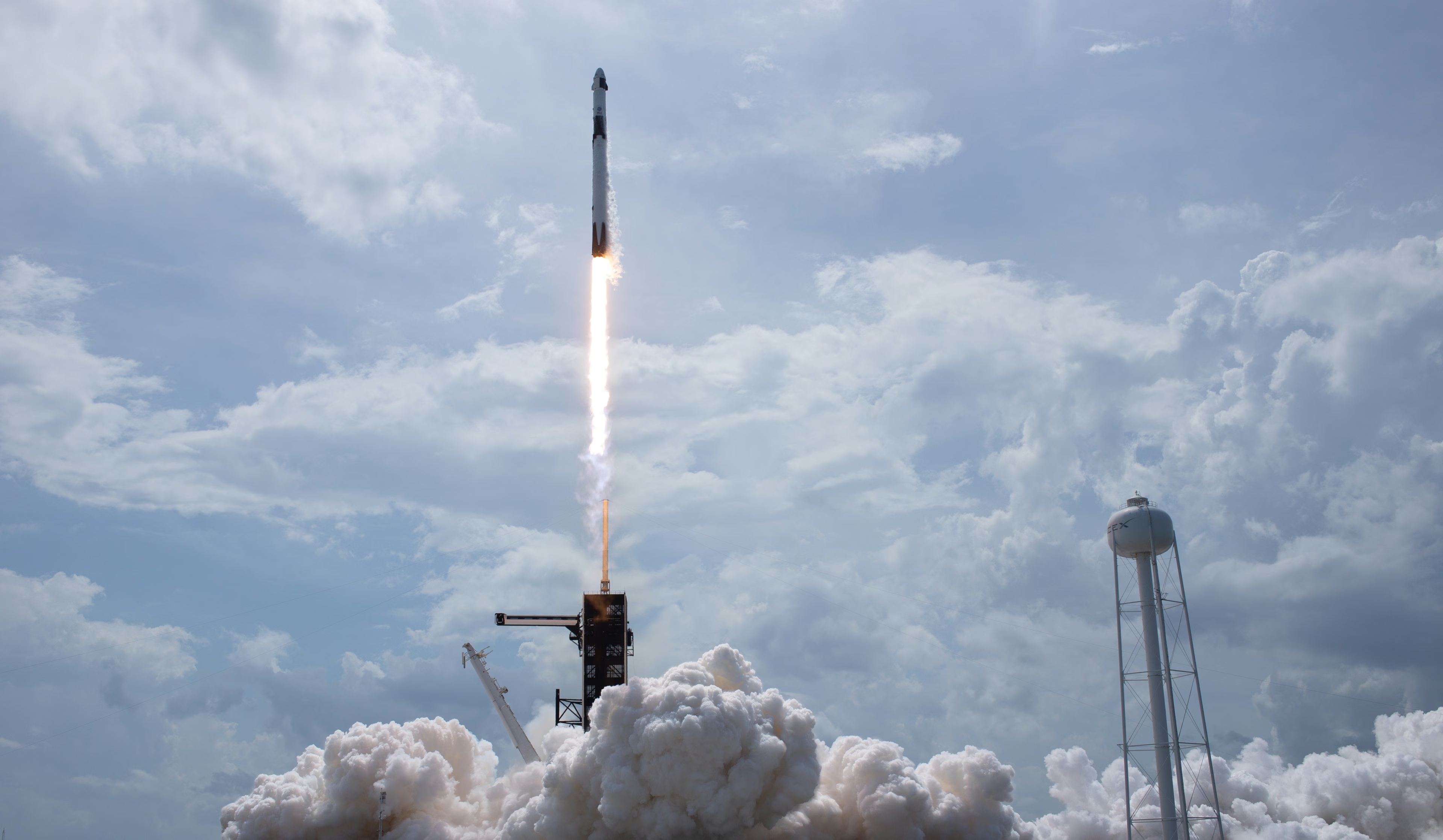

The mystery of SpaceX funding is not that nobody knows where the money came from. Much of it is visible. NASA contracts, Pentagon launch work, Starlink customers, private investors, and commercial launches all sit in plain view. The deeper mystery is how a company built partly through public demand became a privately controlled strategic platform whose most important risk may be the temperament and power of one man.
SpaceX is often narrated as pure private disruption: a rocket company that beat old aerospace by moving faster, accepting risk, and making launch cheaper. That story is partly true. It is also incomplete. NASA's Commercial Crew Program was designed to develop a U.S. commercial crew transportation capability after the shuttle era. NASA says it awarded more than $8.2 billion across Commercial Crew agreements and contracts, and a NASA inspector general report notes that the 2014 fixed-price crew awards included $2.6 billion for SpaceX and $4.2 billion for Boeing.
The state did not simply watch the revolution happen. It became the first serious customer for pieces of it. NASA needed a way back to independent human spaceflight after relying on Russia's Soyuz seats. The Pentagon needed launch services and, increasingly, resilient satellite communications. Reuters reported in 2025 that SpaceX had about $22 billion in government contracts, with roughly $15 billion derived from NASA, and that the company had become critical to U.S. space programs.
That dependence has only expanded. In May 2026, Reuters reported that the U.S. Space Force awarded SpaceX a $2.29 billion fixed-price agreement to build the Space Data Network Backbone, a secure, high-speed satellite communications network intended to connect military sensors and weapons platforms. SpaceX is no longer just a launch provider. It is becoming part of the nervous system of American military space architecture.
This is where funding becomes governance. Public money can help create capacity, but it does not automatically create public control. SpaceX remains founder-centered, and Reuters reporting on the company's IPO documents described governance provisions that would preserve Elon Musk's sweeping authority through super-voting shares, board control, and unusual limits on shareholder rights. The company may depend on public missions, but its internal power structure is not public.
Musk's difficulty as a public figure therefore matters in a way it would not if SpaceX were an ordinary vendor. His companies are tied to NASA, defense, intelligence, launch markets, and global communications. His public feuds, political interventions, and management style can become operational questions. Reuters reported in 2025 that a Trump-Musk rupture triggered reviews of SpaceX contracts and raised concerns about what would happen if political retaliation or corporate threat-making touched Dragon, NASA's only U.S. crew vehicle at the time.
None of this means SpaceX is merely subsidized theater. The company has delivered real capability, lowered launch costs, changed expectations, and forced slow institutions to move. But the heroic entrepreneur story hides a harder question: what happens when national infrastructure is built through private ambition and then governed by private control?
The answer may define the next phase of space politics. SpaceX shows that the future of public infrastructure may not always look like a government agency. It may look like a company whose customers are states, whose investors are private, whose technology is strategic, and whose leader is treated as both visionary and liability. The funding mystery is not a missing ledger. It is a constitutional problem for the commercial space age.
The United States wanted a faster space system and got one. It also got a new dependency. SpaceX is proof that public purpose and private power can build extraordinary things together. It is also proof that when the balance tilts too far toward one personality, the rocket is not the only thing under pressure.