FREE. FAIR. GLOBAL.
The Future of the Strait of Hormuz and the Long Shadow of Empire
The Strait of Hormuz is one of the narrowest passages through which an enormous share of the world’s energy security still flows. It is routinely described as a chokepoint, and that description is accurate. But it is not enough.
GLOBAL. Staff
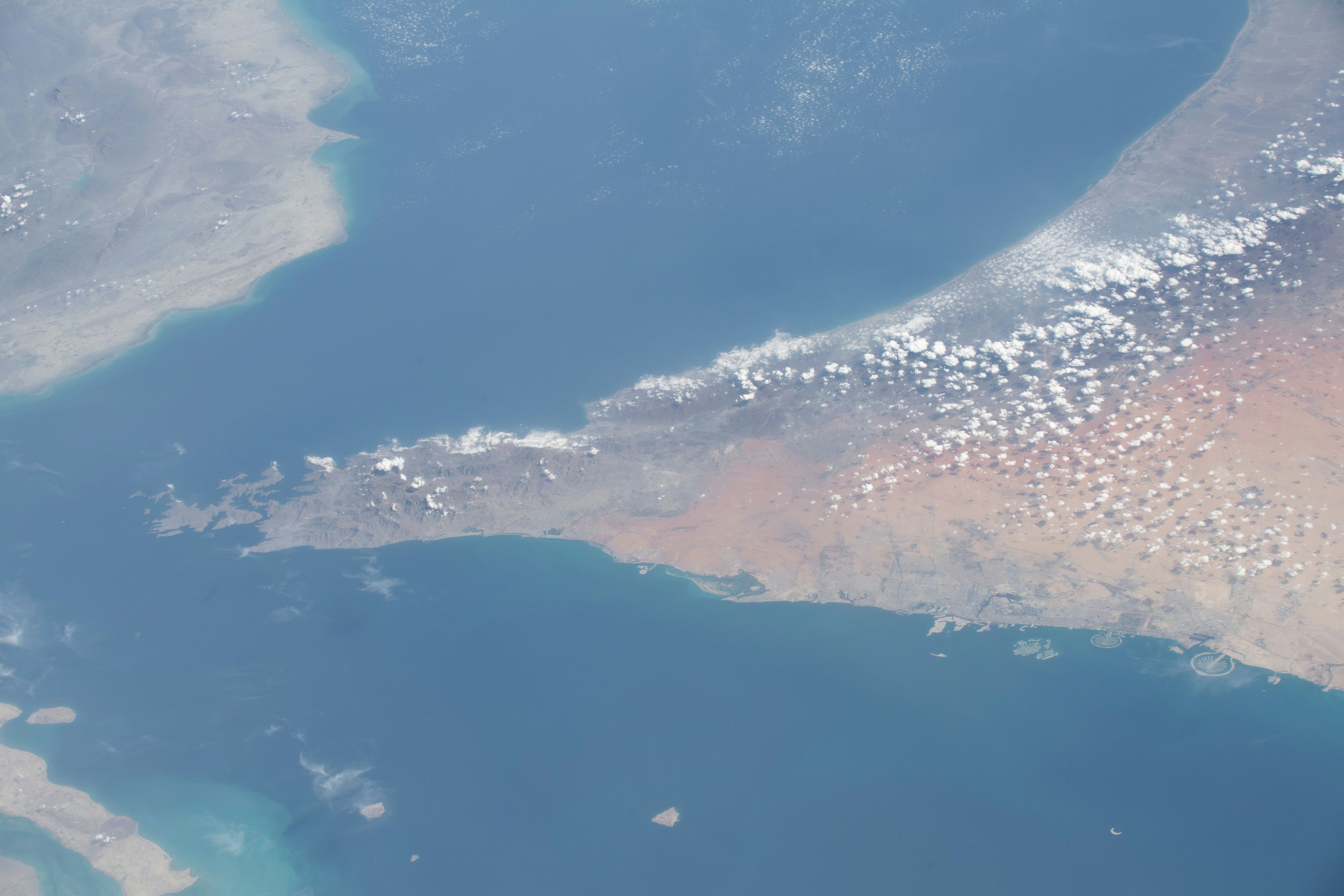

The Strait of Hormuz is one of the narrowest passages through which an enormous share of the world’s energy security still flows. It is routinely described as a chokepoint, and that description is accurate. But it is not enough.
Hormuz is also a historical system compressed into a narrow stretch of water: a place where imperial legacy, Cold War militarization, regional insecurity, and today’s great-power competition all meet. To understand its future, it is necessary to understand how that layered past produced the politics of the present. The British role in the Gulf was foundational.
Long before the modern era of energy geopolitics, Britain sought to secure maritime routes, commercial access, and strategic influence across the region. In doing so, it helped shape a political order in which local rulers, outside guarantees, and naval control were linked together in an imperial framework. Even after formal empire receded, the underlying logic persisted: the Gulf remained a space whose stability was often defined less by self-sustaining regional institutions than by outside enforcement and selective partnerships.
That legacy matters because it left behind more than borders or protectorate histories. It institutionalized a mode of security built around route control. The Gulf’s importance was not only territorial.
It was connective. Whoever influenced its sea lanes influenced commerce, energy, and the broader strategic balance between Europe, Asia, and the Middle East. In that sense, the history of Hormuz is inseparable from the history of empire itself.
The Soviet role entered differently but still decisively. Moscow never replicated Britain’s old position in the Gulf, yet the broader Cold War transformed the surrounding region into a competitive theater. Iran, Iraq, the Indian Ocean, and adjacent revolutionary movements all acquired added significance through superpower rivalry.
The result was a heavily militarized environment in which outside actors viewed regional politics through the lens of balance, access, denial, and ideological competition. Even when local conflicts had their own roots, they were repeatedly reframed inside a wider strategic contest. That historical background helps explain why the strait remains so volatile now.
It is not just a shipping lane. It is the most compressed point in a wider political geography involving Iran’s security doctrine, Gulf Arab hedging, Western naval guarantees, Asian energy dependence, and the increasingly visible role of non-Western great powers. The strait becomes dangerous whenever any of those systems moves sharply out of alignment.
Recent analysis of the Russia-China-Iran relationship is especially important here. Radio Free Europe/Radio Liberty reported in June 2026 that analysts see the growing Russia-China-Iran axis as a broader challenge, even if it falls short of a formal alliance. The Cipher Brief similarly argued in April 2026 that while Washington remains focused on Iran, both Russia and China can see strategic gain in a more pressured and distracted U.
S. posture. These assessments matter for Hormuz because they shape how Tehran calculates escalation.
Iran does not need a treaty ally ready to fight on its behalf. It needs enough diplomatic and strategic depth to believe it can endure confrontation longer than its opponents expect. That changes the future of the strait in subtle but serious ways.
The most likely danger is not a clean, total closure of Hormuz in the dramatic style often imagined in headlines. Full closure would be enormously costly and could invite a broad military response. The more plausible future is chronic coercive instability: tanker seizures, drone incidents, proxy escalation, missile signaling, cyber disruption, insurance shocks, and periodic harassment that raises the price of passage without necessarily stopping it altogether.
This pattern fits the logic of the current era. Iran benefits when it can demonstrate that it retains escalation options below the threshold of all-out war. Outside powers benefit when they can deter without becoming trapped in open conflict.
Shipping and energy markets are left to absorb the uncertainty. The result is a system of managed insecurity in which no actor wants catastrophe, but several actors believe they can profit from calibrated brinkmanship. The old imperial model haunts this environment.
British power once represented a clear, if unequal, external guarantee over Gulf routes. Today the security architecture is more fragmented. The United States remains the primary military guarantor of open passage, but the region is no longer organized around uncontested U.
S. authority. Gulf states hedge.
China’s economic stake in uninterrupted flows is larger than ever. Russia benefits strategically from any Western distraction. Iran has developed decades of experience in asymmetric pressure and crisis navigation.
That means Hormuz now sits inside a more crowded and less hierarchical order. The future is unlikely to be either full stability or permanent blockade. It is more likely to be recurring vulnerability managed through deterrence, bargaining, and repeated demonstrations of risk.
In such a system, each confrontation leaves behind residue: higher insurance costs, harder diplomatic mistrust, thicker naval presence, and more reasons for all sides to prepare for the next incident. The imperial and Soviet legacies matter because they helped create a region in which outside power became normal but trust never became durable. Security was externalized.
Militarization was layered. Political dependency grew faster than regional legitimacy. The post- imperial and post-Cold War eras changed the actors, but not the basic pattern.
The strait remained a place where local fragility and global necessity intersected. That is why the future of Hormuz cannot be reduced to a shipping forecast. It is a test of whether a less Western-centered order can keep a vital chokepoint open without sliding into constant escalation.
It is also a test of whether old systems of deterrence can survive in a world where rival powers do not need to dominate the Gulf directly in order to benefit from its instability. The world often treats chokepoints as if geography alone explains them. But chokepoints are political creations.
They become dangerous when history, dependence, and coercive strategy are forced through a narrow channel. The Strait of Hormuz remains dangerous because too much of that history is still unresolved.