FREE. FAIR. GLOBAL.
Beyond Antalya.
What COP31 in Türkiye can change for communities facing heat, floods and rising seas, and how to tell whether its promises reach them.
The GLOBAL. Team

Reporting updated 21 November 2026
Travel from Türkiye’s Mediterranean coast into the rooms where COP31 debated who pays for a hotter world, and follow those decisions back out.
What was on the table
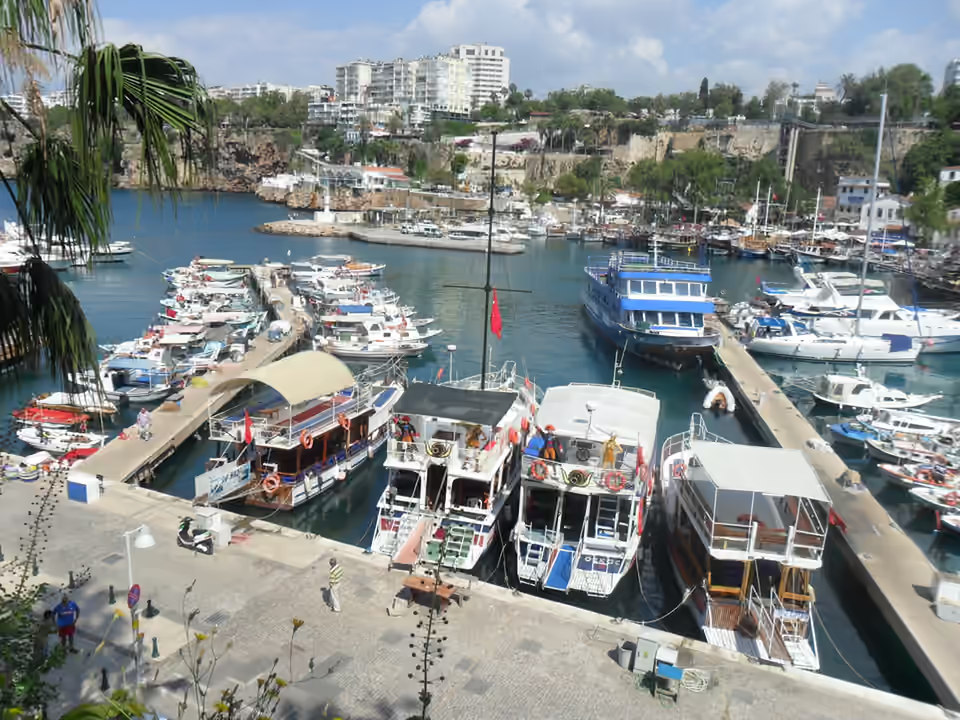
In Kaleiçi, Antalya’s old quarter, narrow streets and shaded courtyards offer clues to how the city has lived with heat. During COP31, the UN Environment Programme reported on a neighbourhood walk led by local architect Şeyda Güvenç Duran that explored these older ways of keeping buildings cool. Antalya’s municipality also put the launch of its Heat Action Plan on the conference’s city programme.
East of Kaleiçi, the conference met at the Expo grounds in Soğucaksu, in Antalya’s Aksu district. The official venue plan put formal plenaries in the accredited Blue Zone, with separate spaces for side events and delegation pavilions. The distance between that neighbourhood and the negotiating room is where climate policy gets tested. Finance, adaptation and loss and damage all appeared on COP31’s formal agenda. Cutting emissions limits future warming. Adaptation helps people live with risks already here or on the way. Loss and damage concerns harms that people cannot fully avoid or adapt to.
A draft cover decision dated 19 November proposed work on how to measure progress toward tripling adaptation finance by 2035. It also proposed an Antalya-to-Addis Ababa roadmap to improve access and identify more predictable sources of funding. The UNFCCC listed spillover closing plenaries in Plenary Anadolu for 21 November. The roadmap and measurement proposals are described here from the 19 November draft. Check the published decisions for the adopted text and who has to act.
Even an adopted decision can leave years of practical work ahead. A request for a technical report can clarify which funds count, but an at-risk coastal town still needs an institution that can approve a project, an engineer who can design it and a budget that can keep it working.
Follow the adaptation money
The UN Environment Programme observed between $28.2 billion and $31.7 billion in international public adaptation finance from developed to developing countries in 2024. Its central estimate for developing-country adaptation needs is $305 billion per year by 2035. The flow and the estimate describe different years and scopes. The needs estimate mostly excludes the private sector’s own adaptation costs.
UNEP calculates that even meeting COP30’s aspiration of tripling international public adaptation finance by 2035 would cover only 20–29 percent of estimated needs after inflation. What qualifies for the baseline therefore matters. So do the terms. A grant that can pay to cool a hospital has a different effect on a government’s budget from a loan it has to repay.
A separate figure often enters the same debate. The finance goal adopted at COP29 calls for at least $300 billion a year for developing countries by 2035, with developed countries taking the lead. That goal covers climate finance more broadly. Project-level records are where readers can see what went to adaptation, who received it and how much was paid.
Can the clinic stay open?
Türkiye launched the Antalya Initiative for Health Resilience during COP31. The World Health Organization describes it as a voluntary way for countries and partners to share what works. WHO’s list of practical needs includes reliable water and power, early warnings, supplies and trained staff. A clinic facing an extreme heat spell may need all of them on the same day.
That shifts the question from building a resilient facility to keeping a service available. Someone needs to maintain backup power. Nurses need an operating plan for extreme heat. A warning must reach staff and patients in time to change what they do. Health ministries, local governments and utilities will need to decide who pays for the work after the first installation.
Other sectors face the same coordination problem. At an Antalya event, the UNFCCC reported that Saint Kitts and Nevis connected its electric-vehicle plans to vehicle imports, taxes and investment in charging infrastructure. The example was about transport. Its lesson applies to adaptation too. A national target moves when the institutions that control the budget, rules and infrastructure can carry it out together.
Who gets to shape the plan?
UN Climate Change’s accredited Blue Zone pavilion programme brought youth governance, worker heat and adaptation measurement into parallel sessions, some available by webcast. These discussions help identify the people and institutions that can make climate policy more practical. The official negotiating record tracks a different process, where Parties agree decisions.
Representation has a practical effect after the summit. A local youth organisation may know where a warning system fails to reach young people. An outdoor worker may know why a heat protocol breaks down on a job site. The people with that knowledge can help design a project if they have time, resources and a way to influence the budget.
Look for rules that let community organisations propose projects, clear eligibility requirements and feedback when an application is rejected. The test is whether affected people can change a decision while there is still something to decide.
The cost of convening
The conference itself offers a lesson in reading climate-related numbers. Article 12 of the host-country agreement provisionally estimates $7,715,200 in additional costs of holding COP31 in Antalya instead of Bonn that Türkiye must bear. The estimate covers items such as UN staff travel, preparatory missions and information technology services. Türkiye also has obligations under other provisions of the agreement.
The UN Board of Auditors reported that amounts governments covered under host agreements for the previous four conferences ranged from $5,259,386 to $7,698,429 in Secretariat costs. It also found that most organising costs were borne directly by host countries and fell outside comparable reporting under those arrangements.
The Antalya number is an estimate for a defined set of additional costs. A full account of hosting would also need actual outturns and the costs the host pays directly. The same habit helps when reading an adaptation total. Ask which costs were counted, what year the figure describes and which body is responsible for reporting it.
What to check before COP32
Start with the published decisions and find any named institution, reporting date or funding instruction. Then look outside the UN record. A climate fund’s project page can show an approval. A disbursement record can show a transfer. A local budget or procurement notice can tell you whether the money is paying for work on the ground.
A useful test also needs a local result that people can observe. Was a clinic open on the hottest days? Did a flood warning reach households in time? Did the project have a budget for maintenance after its first year? The appropriate measure depends on the risk and should be possible to check more than once.
The public record from Antalya can tell us what governments and institutions are expected to do. The next chapter will show up in budgets, contracts and whether people can still use the services they depend on during extreme weather.
Sources
- UNFCCC · COP31 conference and session documents
- UNFCCC · Adopted COP31 agenda, 9 November
- UNFCCC · Draft cover decision, 19 November
- UNEP · Adaptation Gap Report 2026
- UNFCCC · Climate finance goals discussed in Antalya
- WHO · COP31 Health Day remarks, 9 November
- WHO · COP31 health and climate briefing, section 2.2
- UNFCCC · How countries are turning climate plans into action
- UNFCCC · COP31 pavilion programme
- UNFCCC · Türkiye host-country agreement, Article 12
- UN Board of Auditors · 2025 report, paragraph 96
- UNEP · Keeping cool in Kaleiçi
- Antalya Metropolitan Municipality · COP31 events
- UNFCCC · Official Blue Zone venue map
- UNFCCC · Calendar of closing plenaries
- COP31 Presidency · Green Zone
- Asian Development Bank · Mountain Agenda at COP31