FREE. FAIR. GLOBAL.
Inside the UN’s committee season.
After the speeches, six committees negotiate the text, priorities and resources that shape the UN’s work. Here is what that means beyond New York.
GLOBAL. Politics & Affairs
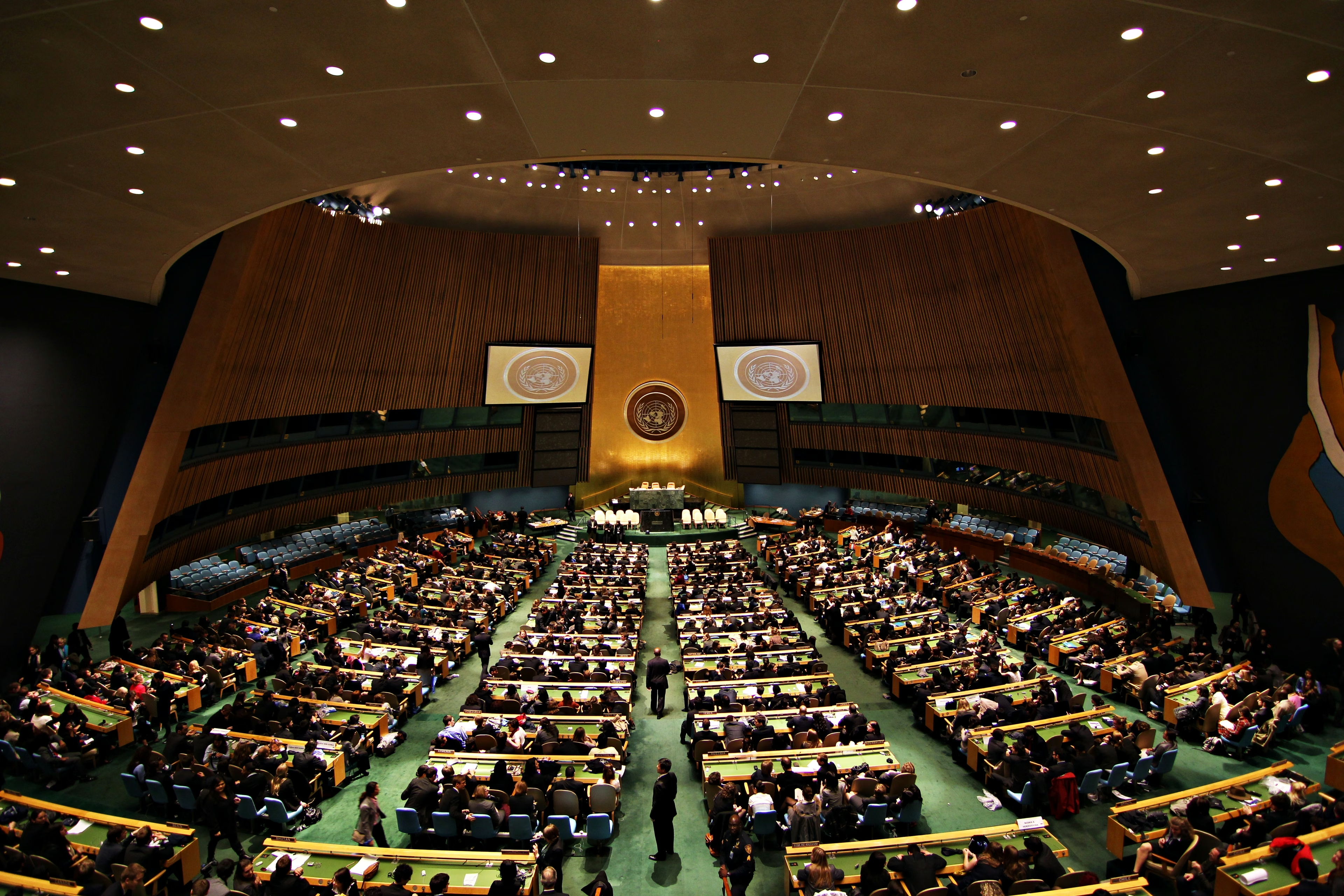

An explanatory guide to the autumn work of the General Assembly’s six Main Committees during its 81st session. Individual committee timetables differ. Agenda items, proposals and scheduled meetings are distinguished here from adopted General Assembly outcomes.
The work behind the speeches.
Outside New York, the stakes are practical. Committee negotiations help define development priorities, keep human-rights situations under scrutiny and examine the resources for the tasks the UN is asked to carry out. For a government, an aid organisation or someone relying on those services, the difference lies in what is agreed and what is delivered.
The world sees the UN most clearly when national leaders take the General Assembly’s podium. Much of its consequential work continues after those speeches, in committee rooms where delegations debate proposals, negotiate language and work out what they can recommend together. The 81st session extends into September 2027; the autumn committee season is one part of that longer process.
Each Member State may be represented on all six Main Committees. Their subjects range from weapons and development to rights, budgets and international law. They examine the agenda allocated to them and send draft resolutions and decisions onward to the Assembly. A committee recommendation is therefore a stage in a decision’s passage, rather than a substitute for the Assembly’s action.
For readers, the useful questions are concrete: what text changed, who supported or opposed it, and what action follows? The Assembly’s official account of its powers and decision-making explains that much work is agreed by consensus. That can show a negotiated common position, while the final wording still determines how ambitious or specific the agreement is.
How governments define the next risk.
The First Committee’s current document list includes a compilation of states’ views on artificial intelligence in the military domain and its implications for peace and security. The listing establishes an issue under discussion, not an agreed global rule for military AI. GLOBAL.’s reading is that these exchanges matter because the definitions governments choose now can shape the scope of later negotiations: which risks are recognized, who must answer for them, and what cooperation is considered possible.
A related task unfolds in the Sixth Committee, whose published timetable runs from 5 October to 20 November. Its agenda includes the conferences on preventing and punishing crimes against humanity and protecting people in disasters, alongside the rule of law, universal jurisdiction and the work of the International Law Commission. These are continuing legal processes. An agenda entry does not establish that a new convention has been concluded or that a state has accepted a treaty obligation. Their significance lies in the direction and substance of the legal work that follows.
The distance between a goal and the means to reach it.
The Second Committee’s 81st-session remit brings macroeconomic policy, financing for development, sustainable development, poverty eradication, agriculture, food security and technology into the same conversation. These subjects connect through a practical question: what capacity do countries have to carry out the priorities they endorse?
GLOBAL.’s analysis is that development negotiations should be read through that implementation gap. A commitment on food security or climate resilience has different prospects when a government has funding, expertise and functioning institutions than when it lacks them. Committee language can identify priorities, request further work or support cooperation. The outcome still needs to be followed into the institutions and national decisions responsible for delivery. Readers should look for specific responsibilities and follow-up, as well as the strength of the promise.
Keeping people visible in the negotiations.
The Third Committee hears and interacts with special rapporteurs, independent experts and chairs of treaty bodies and working groups. Its agenda reaches across the rights of women and children, Indigenous issues, refugees, racism and self-determination. It also covers youth, ageing, disability and other questions of social development.
That breadth gives governments an opportunity to test their public commitments against evidence and expert scrutiny. It also makes the wording consequential: who is named, which protections remain explicit, and whether a text asks for monitoring or further reporting. These are questions to examine in each proposal, not claims that a particular text has already been strengthened or weakened this season. The UN’s current video archive provides a way to hear formal proceedings directly and compare the debate with the written record.
The questions that outlast the headlines.
The Fourth Committee’s agenda includes decolonization, reviews of peacekeeping and special political missions, UNRWA, and questions affecting Palestinian rights. It also covers matters such as atomic radiation, information and cooperation in the peaceful uses of outer space. The breadth is a reminder that the UN’s political work stretches across issues with very different histories and institutions.
For communities affected by conflict, displacement or unresolved political status, international attention has practical value when it sustains scrutiny and supports a clear next step. GLOBAL.’s assessment is that readers should examine the proposed task as closely as the declaration of concern: who is being asked to act, what information must be reported back, and what resources are involved? Committee consideration by itself does not change a mission’s mandate or settle a territorial dispute. The relevant final decision and responsible body must be identified.
Every mandate needs a means of delivery.
The Fifth Committee’s published main-session programme lists 5 October to 4 December and includes the proposed programme plan and budget for 2027. That is a programme for consideration, not evidence that the final budget has already been approved. Its detailed budget-document list spans political affairs, disarmament, justice, law and development, showing how resources cut across the wider UN agenda.
This season’s choices are concrete. On 13 October, the Secretary-General presented a $3.3 billion programme budget proposal for 2027. Earlier, in his May remarks on UN80, he described proposed administrative consolidation and the relocation of functions as part of the reform effort. The budget debate therefore carries a question about how the Organization will deliver its work while changing its operating model. These are proposals for Member States to scrutinize; the headline figure does not establish the final appropriation or prove that a particular saving improves delivery.
There is also a formal connection between policy proposals and their cost. Under the process explained in the UN’s editorial manual, a committee recommendation involving expenditure must be accompanied by the Secretary-General’s estimate. The Assembly must give the Fifth Committee an opportunity to state the budgetary effect before voting on a proposal with anticipated expenditure. The practical test is whether the people, systems and funding needed for an agreed task are provided. Announcing a mandate and supplying the means to deliver it are separate steps worth tracking.
What this season can change.
The UN Charter gives the Assembly authority to approve the Organization’s budget and apportion its expenses under Article 17. Article 22 permits it to establish subsidiary organs needed for its functions. Those institutional powers have consequences for how the UN operates. The Assembly’s policy recommendations to states generally have a different legal character: the Dag Hammarskjöld Library explains that implementation of those recommendations rests with Member States.
GLOBAL.’s assessment is that committee season matters through the combination of political agreement, institutional direction and follow-through. A text can clarify a shared expectation, give an issue a continuing place on the agenda or specify work for the UN to undertake. Its effect beyond New York depends on what happens next. The strongest measure of this season will be the connection between the final wording, the resources committed and the action people can actually see.
The six Main Committees
01 / Disarmament & International Security. The First Committee considers disarmament and international security. Its current documentation includes states’ views on artificial intelligence in the military domain. The question is how governments frame emerging risks and possible cooperation. Follow the committee at the UN
02 / Economic & Financial. The Second Committee addresses development and the global economy. Financing, poverty, food security and sustainable development connect diplomatic negotiations to the resources available for people’s daily lives. Follow the committee at the UN
03 / Social, Humanitarian & Cultural. The Third Committee examines rights and social and humanitarian questions. Its remit includes children, refugees, youth, ageing and disability, alongside exchanges with independent human-rights experts. Follow the committee at the UN
04 / Special Political & Decolonization. The Fourth Committee covers unresolved political questions and decolonization. Peacekeeping, special political missions and UNRWA sit within a broad agenda. Scrutiny of those activities matters to communities affected by conflict and displacement. Follow the committee at the UN
05 / Administrative & Budgetary. The Fifth Committee examines the UN’s resources and administration. The 81st-session programme includes the proposed programme plan and budget for 2027. Its recommendations connect agreed tasks to staffing and financial provision. Follow the committee at the UN
06 / Legal. The Sixth Committee works on international legal questions. This session’s agenda includes the conferences on crimes against humanity and protecting people in disasters, as well as the rule of law and universal jurisdiction. Follow the committee at the UN
What to watch next
Follow the final text. Compare the committee recommendation with the Assembly’s adopted resolution or decision. Check amendments, recorded votes and explanations of position.
Follow the resources. Look for programme budget implications, the Fifth Committee’s recommendation and the final budget decision where new expenditure is involved.
Follow the next obligation. Identify who must act or report next, and distinguish a UN institutional mandate from a policy recommendation to governments.
Sources
- UNGA81: session dates and overview
- The six Main Committees: membership and structure
- General Assembly functions, powers and decision-making
- First Committee: 81st-session documentation
- Second Committee: current remit
- Third Committee: current remit
- UN Web TV: 81st-session Third Committee archive
- Fourth Committee: current remit
- Fifth Committee: 81st-session programme
- Proposed 2027 programme plan and budget: documents
- UN report, 13 October 2026: proposed 2027 programme budget
- Secretary-General, 28 May 2026: UN80 reform proposals
- Sixth Committee: 81st-session schedule and agenda
- Programme budget implications and rule 153
- UN Charter: General Assembly, Articles 9–22
- Dag Hammarskjöld Library: resolutions, decisions and legal status